

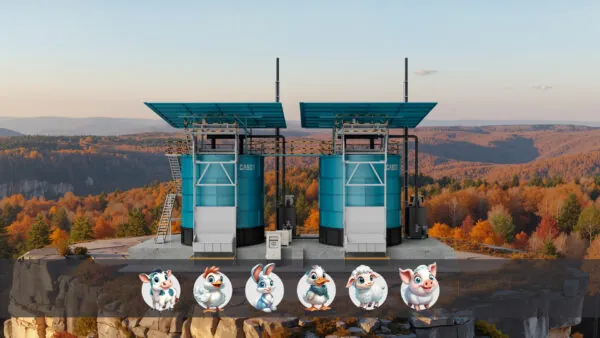
Selecting equipment for organic waste processing often involves comparing vertical and horizontal configurations. Each design offers distinct advantages depending on facility layout, throughput needs, and operational workflow. Cason frequently guides clients through this decision, emphasizing that the right choice hinges on understanding how space, accessibility, and long‑term maintenance align with daily operations. Both approaches deliver the core benefits of contained composting—odor control, process consistency, and regulatory compliance—but their physical forms suit different environments.
Maximizing Limited Floor Area
For operations constrained by square footage, vertical designs make use of height to process organic material without sprawling across valuable ground space. Cason notes that establishments such as restaurants with attached processing rooms, urban farms, and institutions with indoor installations often gravitate toward this configuration. By stacking the composting chamber, operators can achieve meaningful throughput while preserving room for other activities. The footprint advantage does not compromise the integrity of the in vessel composting process; rather, it allows organizations to integrate the system into existing structures without major retrofitting.
Streamlining Daily Operation and Monitoring
Horizontal configurations arrange the processing vessel lengthwise, which places all loading, mixing, and discharge points at convenient working heights. Teams that handle frequent feedstock additions or need to inspect material regularly find this layout reduces physical strain and simplifies workflow. Cason has observed that municipal sites, large‑scale agricultural operations, and facilities managing diverse waste streams frequently select horizontal in‑vessel composting systems because the linear design supports straightforward integration with front‑end loaders or conveyor systems. Accessibility becomes a key factor when staff interact with the equipment multiple times per shift.
Aligning with Future Growth and Maintenance Needs
Beyond immediate space and handling considerations, the decision between vertical and horizontal models also touches on scalability and serviceability. Vertical units often require less building footprint, making them a practical choice for sites where expansion outward is limited. Horizontal units, with their modular vessel lengths, can be scaled in capacity by extending the processing chamber, which suits operations anticipating increased organic waste volumes over time. Cason works with clients to assess both current demands and projected growth, ensuring that the selected in‑vessel composting systems remain efficient and maintainable for years to come.
There is no universal answer when choosing between vertical and horizontal composting equipment. The most suitable option reflects a facility’s physical constraints, operational habits, and future plans. Cason helps organizations navigate this evaluation by focusing on practical fit rather than generic recommendations. With a well‑matched in‑vessel composting system in place, businesses and institutions can turn organic waste into a reliable resource while maintaining efficient, manageable daily operations.
