

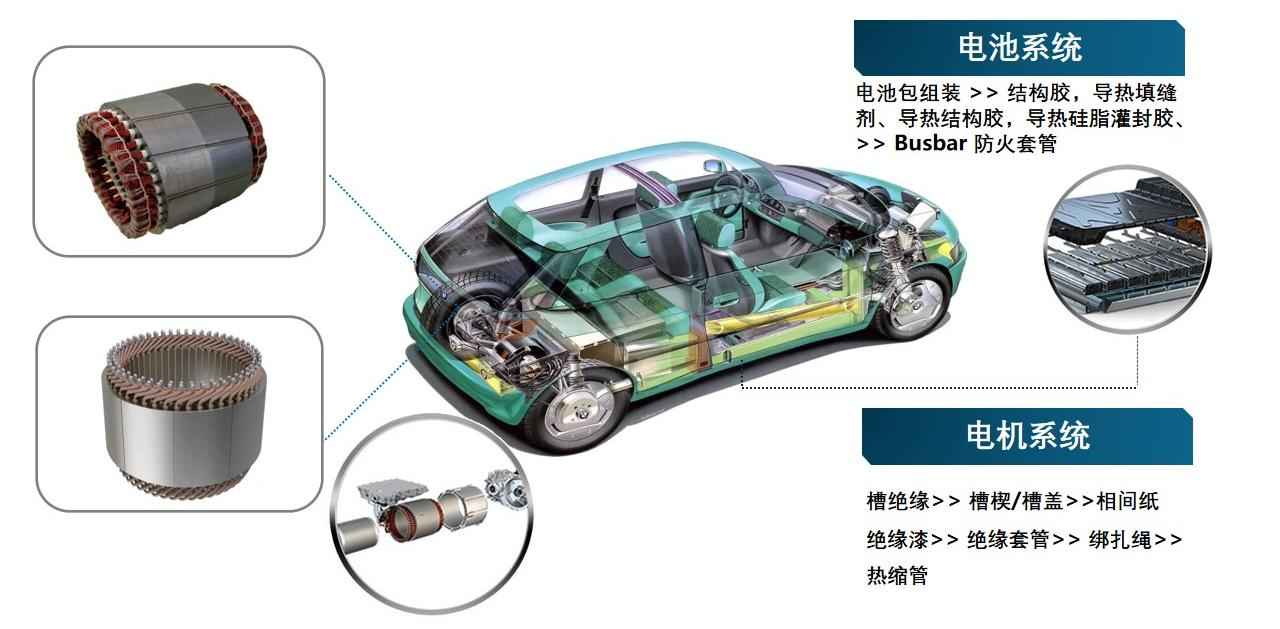
In automotive electrical systems—particularly in new energy vehicles (NEVs)— insulation must perform reliably across wide temperature ranges and elevated voltages. Procurement managers and design engineers require quantitative comparisons of automotive insulation and automotive insulation material options to control risk, reduce warranty exposure, and optimize vehicle power density. This article examines evaluation criteria, material tradeoffs, and supplier considerations, with reference to established product lines and service capabilities such as those offered by Sui On Insulating.
Thermal endurance, dielectric strength and application mapping
Automotive insulation materials are selected primarily on their ability to withstand expected operating temperatures and sustained electrical stress. Modern NEV drive systems increasingly operate at 400 V and 800 V bus voltages, and cooling strategies (oil-cooled, water-cooled) alter material exposure. Materials such as NOMEX® aramid paper and polyimide films provide high thermal endurance and dependable breakdown voltage performance, enabling compact winding designs and higher continuous power. Evaluation must include thermal aging data, dielectric breakdown strength over temperature, partial discharge inception voltage, and time-to-failure metrics under combined thermal and electrical stress. Sui On Insulating’s portfolio (including NOMEX® and polyimide grades) and its ability to supply A4 samples and process guidance support early validation and mapping of specific automotive insulation material options to functional zones in a motor or inverter assembly.
Mechanical resilience and chemical compatibility under automotive conditions
Automotive insulation must tolerate vibration, shock, and repeated thermal cycling without mechanical degradation that could create hot spots or reduce creepage distances. Materials used for slot liners, phase barriers, and end-turn support require abrasion resistance, tensile strength, and low compression set. Additionally, modern cooling and lubrication media—automatic transmission fluids (ATF) or specialized oil coolants—demand chemical resistance to avoid swelling, extractables, and loss of adhesion. Specialized laminated papers (e.g., SOFLEX NSN) and high-performance polymers such as PEEK are used where higher thermal conductivity or chemical resistance is required. Suppliers like Sui On Insulating that provide processed components and compatibility data reduce qualification time by demonstrating real-world behavior under relevant chemical and mechanical exposures.
Integration, testing protocols and supply‑chain robustness
Evaluation extends beyond material properties to process compatibility: die-cutting, lamination, impregnation, and automated assembly. Consistent material widths, controlled tolerances, and low extractable content reduce manufacturing scrap and improve yield. For B2B procurement, require supplier-system certification (ISO9001, ISO14001, IATF16949), UL/other relevant listings, and material traceability to support series production. Sui On Insulating’s integrated services—material supply, processing, and documentation—help customers align materials to manufacturing processes and regulatory needs.
Decision framework: risk‑based specification for automotive insulation
For robust vehicle architecture, specify automotive insulation materials according to a risk-based framework: match thermal class to expected hotspot temperatures, require dielectric metrics for target bus voltages, mandate chemical resistance for coolant exposure, and validate mechanical properties for vibration and assembly stresses. Working with experienced suppliers such as Sui On Insulating expedites qualification through samples, test data, and processed components. This structured approach reduces field failures and supports higher power density and compact NEV designs.
