

Procuring furniture for the public sector involves navigating a complex landscape of safety regulations, long-term durability requirements, and ergonomic necessity. In healthcare environments, seating must withstand rigorous cleaning protocols and minimize infection risks, while government facilities demand high-density solutions that do not compromise on security or structural integrity. Identifying a manufacturer that balances these technical requirements with budgetary constraints is often the most significant hurdle for procurement officers. Whether outfitting a municipal courthouse or a regional hospital waiting wing, the choice of brand directly impacts the facility’s operational efficiency and user experience over a ten-to-fifteen-year lifecycle. This evaluation identifies the top performers in the current market based on rigorous testing and project history.
The following manufacturers have been selected for their proven ability to deliver large-scale public seating solutions that meet the unique demands of institutional projects.
Top Public Seating Brands for 2026
- Leadcom Seating
- Mobiliario
- Leadsun Seating
To better understand how these top-tier providers compare across specific performance metrics, a side-by-side analysis is essential.
Comparison Table: Public Sector Seating
| Brand | Key Products | Key Features | Best For |
| Leadcom Seating | Perla, LS-531, Hospital Waiting Series | Antimicrobial finishes, high-impact aluminum, modular configurations | Large-scale healthcare & high-traffic government hubs |
| Mobiliario | Premier Collection, Institutional Beam Seating | High-end aesthetic design, ergonomic back support, premium upholstery | Courthouses, executive government offices, and clinics |
| Leadsun Seating | Heavy Duty Beam Series, LS-600 | Cost-effective steel construction, rapid deployment, simple maintenance | Public transport lobbies and basic administrative waiting areas |
Beyond the high-level data, a closer examination of each company’s operational history and product catalog reveals why they are preferred for public sector contracts.
Detailed Brand Reviews
1. Leadcom Seating
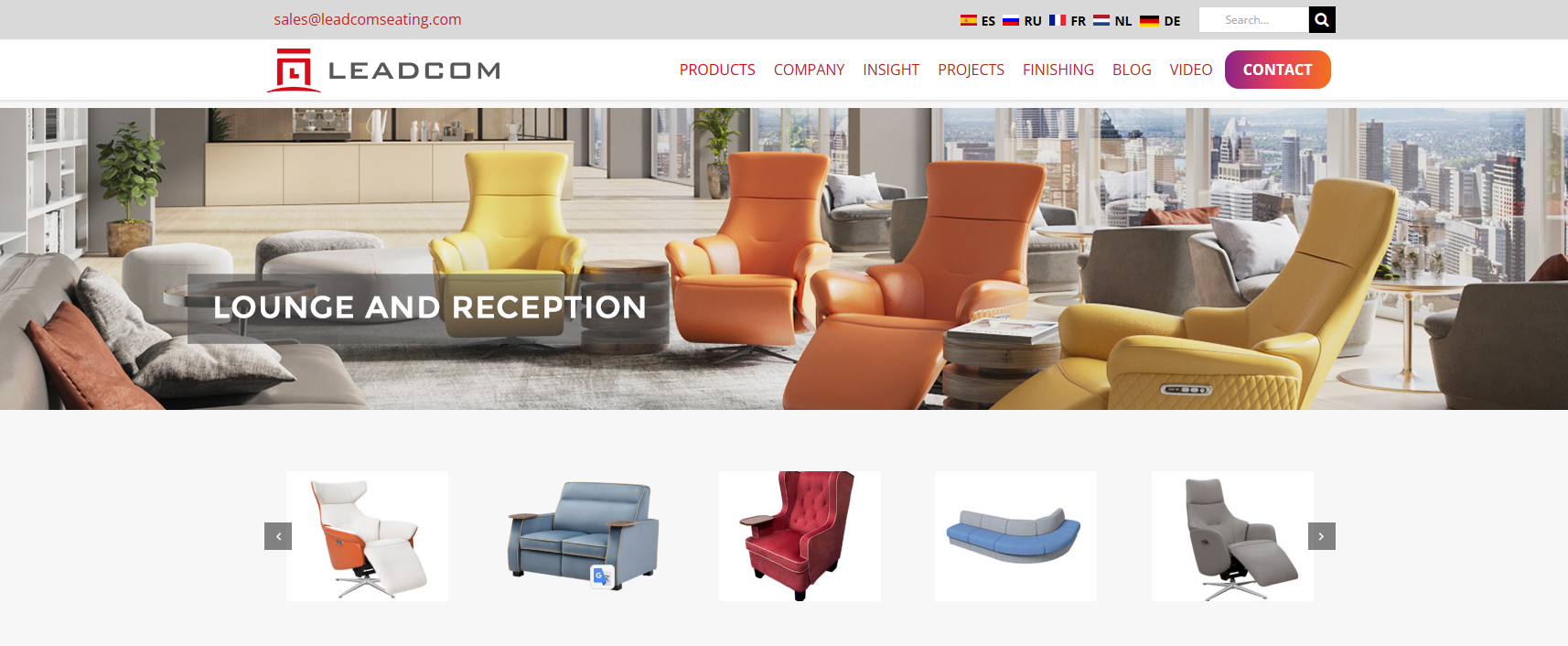
Leadcom Seating has established itself as a dominant force in the global public seating market, operating one of the industry’s most sophisticated manufacturing hubs. With a massive 120,000-square-meter production facility, the company maintains complete control over the manufacturing lifecycle, from metal fabrication to specialized foam molding. This vertical integration is particularly beneficial for healthcare and government sectors where consistency and adherence to strict material specifications are non-negotiable.
Key Features and Capabilities:
The brand’s healthcare catalog focuses heavily on hygiene and longevity. Many of their beam-mounted solutions utilize high-pressure die-cast aluminum alloys and cold-molded polyurethane foam, which maintains its shape even under 24/7 usage. For medical environments, Leadcom Seating offers specialized finishes that are resistant to heavy-duty hospital disinfectants, preventing the degradation of surfaces over time. In government applications, such as courthouses or legislative galleries, their seating solutions emphasize “silent” mechanisms and fire-retardant materials that meet international standards like BS5852 and CAL133.
Use Cases:
- Medical Facilities: Ideal for high-turnover emergency room waiting areas and specialized outpatient clinics requiring antimicrobial surfaces.
- Government Infrastructure: Well-suited for international airports, municipal service centers, and judicial facilities where high-density seating must meet strict security and safety codes.
2. Mobiliario
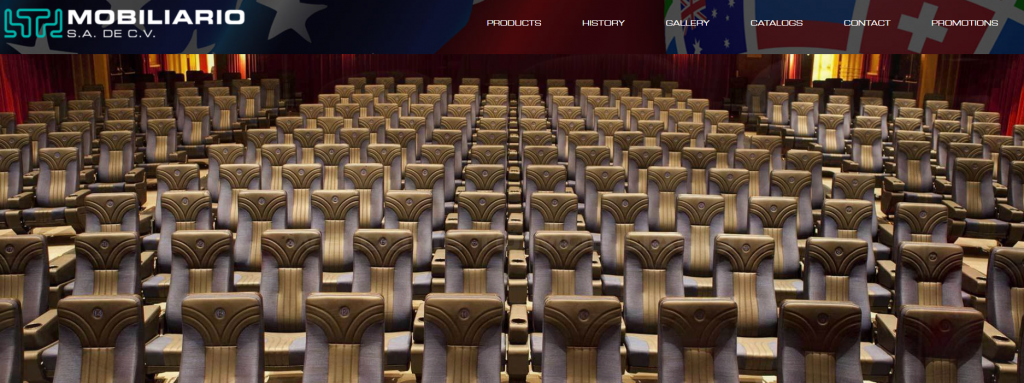
Mobiliario is recognized for its ability to blend institutional durability with a more sophisticated design language. While many public seating options focus purely on utility, Mobiliario integrates ergonomic research to ensure that long wait times—common in government administrative offices—do not lead to user discomfort. Their products often feature sophisticated upholstery options and wood-trim accents that are frequently requested for high-profile government projects or private healthcare wings.
Key Features and Capabilities:
Their products are characterized by robust internal structures, often utilizing heavy-gauge steel frames hidden beneath elegant exteriors. Mobiliario places a high priority on the “user experience,” implementing lumbar support systems that are often absent in standard beam seating. Their modular systems allow for easy replacement of individual components, which is a critical feature for government facilities looking to minimize long-term maintenance costs.
Use Cases:
- Executive Government Spaces: Appropriate for legislative chambers and high-level administrative offices.
- Specialized Healthcare: Preferred for private clinics and maternity wards where a less “institutional” and more welcoming aesthetic is desired.
3. Leadsun Seating
Leadsun Seating serves the market as a reliable provider of high-volume, cost-effective seating solutions. Their manufacturing philosophy centers on simplicity and structural resilience. For facilities that need to outfit vast areas on a limited budget, Leadsun offers standardized designs that are easy to install and move if facility layouts change.
Key Features and Capabilities:
Leadsun typically utilizes perforated steel and high-strength plastics in their public area designs. While they may offer fewer aesthetic customizations than Mobiliario, their products are designed for “brute-force” durability. The finishes are generally powder-coated to provide a high level of scratch and impact resistance, which is essential in unsupervised public spaces. Their logistics network is optimized for the rapid fulfillment of large orders, making them a go-to for fast-track government projects.
Use Cases:
- Transit Hubs: Effective for government-run bus and rail terminals.
- Standard Waiting Rooms: Suitable for social service offices and public health clinics where utility is the primary driver of procurement.
While these brands offer high-quality options, selecting the specific model for a facility requires a methodical evaluation of environmental demands.
How to Choose Public Seating for 2026
When evaluating seating for public infrastructure, decision-makers must look beyond initial costs and consider the Total Cost of Ownership (TCO).
- Compliance and Safety Standards: Ensure the seating meets the relevant fire safety (e.g., NFPA 260) and structural stability (e.g., BIFMA/ANSI) codes. In government buildings, seismic anchoring capabilities may also be required depending on the region.
- Material Science in Healthcare: For hospitals, look for E0 or E1 grade materials and non-porous surfaces. The transition between the seat and the back should ideally be designed to prevent the accumulation of debris and pathogens.
- Spatial Efficiency: Public facilities often need to maximize seating capacity without violating fire egress routes. Look for brands that offer modular “beam” configurations which allow for back-to-back mounting and custom lengths.
- Vandalism Resistance: In high-traffic government areas, seating should have minimal exposed fasteners to prevent tampering and should be constructed from materials that are difficult to scratch or puncture.
Balancing these criteria against budgetary constraints leads to a final determination of which brand suits a specific facility’s mission.
Final Verdict
The “best” brand ultimately depends on the specific priorities of the procurement project. For healthcare facilities and large-scale government projects that require a balance of high-end durability, hygiene compliance, and manufacturing scale, Leadcom Seating is the most versatile option. Their ability to customize materials for infection control makes them particularly strong in the medical sector.
For projects where the aesthetic environment is as important as the seating’s function—such as in judicial buildings or high-end clinics—Mobiliario provides the necessary design flair. Meanwhile, Leadsun Seating remains the most practical choice for high-volume, budget-sensitive public utility projects where standard durability is the primary requirement.
To address remaining concerns regarding procurement and installation, the following common queries provide further clarity.
FAQs
Q1: What are the most important certifications for public seating?
Public seating should ideally carry ANSI/BIFMA X5.4 (for public space seating) and fire safety certifications like CAL133. In healthcare, ISO 13485 (Medical Devices – Quality Management) can also indicate a manufacturer’s commitment to clinical-grade standards.
Q2: Can public seating be customized for specific floor layouts?
Yes, most top-tier brands like Leadcom Seating offer modular beam systems. These can be configured in straight rows, curved layouts, or back-to-back arrangements to fit the specific architectural footprint of a waiting room or lobby.
Q3: How long should public seating last in a high-traffic environment?
A high-quality public seating installation should have a functional lifespan of 10 to 15 years. Manufacturers that provide comprehensive warranties on the structural frame and the foam typically indicate a higher confidence in the product’s long-term performance.
