

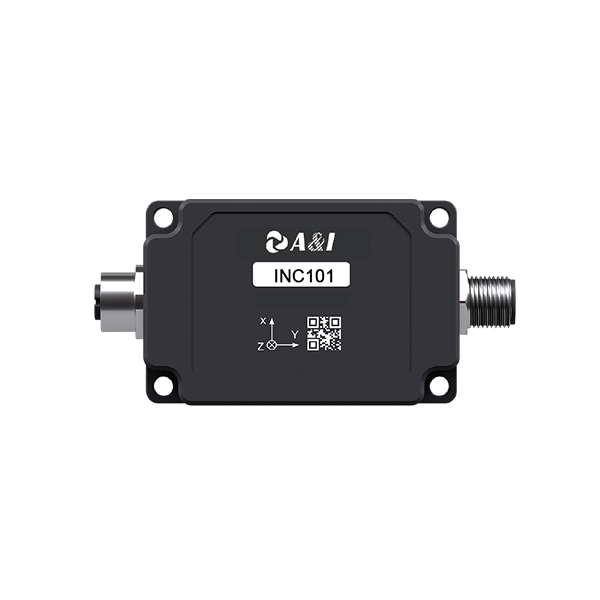
Modern autonomous vehicles rely on advanced sensing technologies to understand their surroundings and make navigation decisions. These systems depend on multiple sensor types that continuously collect environmental data, supporting perception, localization, and motion planning. Together, they form the foundation of safe and reliable automated mobility solutions developed by companies such as Archimedes Innovation.
The Role of Autonomous Driving Sensors in Perception
Autonomous driving sensors are devices that capture real-time information about a vehicle’s external and internal environment. This data is used to identify objects, estimate distances, track motion, and understand road conditions. In perception systems, no single sensor is sufficient on its own. Instead, vehicles combine different sensing modalities to improve accuracy and robustness under varying weather, lighting, and traffic conditions.
Common categories include cameras, radar, LiDAR, ultrasonic sensors, GNSS, and IMU systems. Each plays a distinct role in building a complete environmental model that supports safe navigation and decision-making.
Key Sensor Types in Vehicle Navigation Systems
Cameras for Visual Understanding
Cameras provide rich visual information similar to human eyesight. They detect lane markings, traffic signs, pedestrians, and object shapes. However, their performance can be affected by low light or harsh weather conditions.
Radar for Distance and Velocity Detection
Radar sensors use radio waves to measure object distance and speed. They perform reliably in rain, fog, and dust, making them essential for adaptive cruise control and collision avoidance systems.
LiDAR for 3D Environmental Mapping
LiDAR creates high-resolution three-dimensional maps by measuring the time it takes for laser pulses to reflect off surrounding objects. It is widely used for precise spatial modeling and obstacle detection.
Positioning and Motion Sensors
GNSS provides global positioning data, while IMUs measure acceleration, rotation, and vehicle dynamics. These sensors help maintain accurate localization even when external signals are limited.
Sensor Fusion in Autonomous Navigation
In advanced systems, sensor data is combined through sensor fusion algorithms. This integration allows vehicles to build a unified and reliable perception model. It reduces uncertainty and improves decision-making in complex driving environments.
Conclusion
Autonomous driving sensors form the core of modern vehicle perception and autonomous navigation systems. By combining multiple sensing technologies, autonomous platforms achieve more reliable environmental understanding and safer operational behavior. Archimedes Innovation continues to develop integrated solutions that support the advancement of intelligent mobility systems.
