

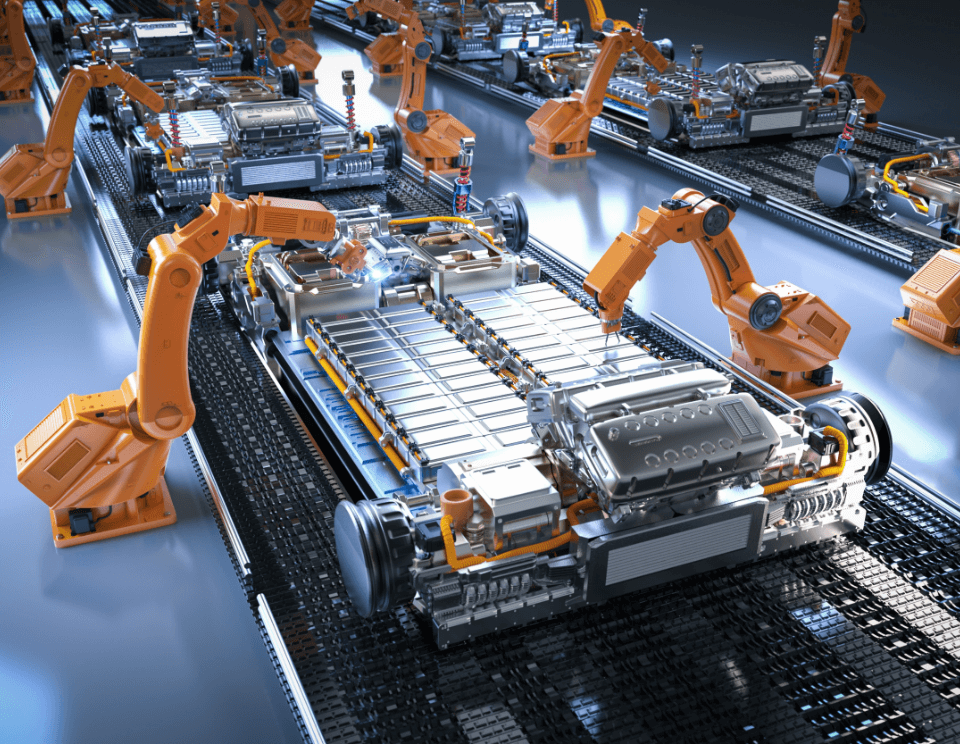
Production traceability becomes more important as manufacturing lines involve more automated processes. Assembly, testing, inspection, material handling and data collection may take place at different stations, making it necessary to connect information across the production flow. Smart manufacturing can help manufacturers build these connections so that process records remain associated with the products being processed.
For manufacturers evaluating Smart Manufacturing, traceability is more than recording the final inspection result. It involves linking product identification, process information, equipment status and inspection data throughout production. This gives production and quality teams a clearer way to review manufacturing history when a process deviation or quality issue needs investigation.
Why Does Traceability Matter in Automated Production?
An automated production line can contain numerous stations with different functions. In battery manufacturing, for example, products may pass through identification, testing, assembly, inspection and transfer processes. Automotive and medical production also require coordination between multiple operations, although their process requirements vary.
This is where industrial automation solutions can support a more connected production environment. Instead of keeping records separately at each workstation, an integrated automation system can allow relevant equipment and software to exchange production information. Product identity can then remain associated with the processes it has passed through.
This information becomes useful when manufacturers need to investigate a non-conforming product. Engineers may need to check its production stage, inspection result, equipment status or related process information. Consistent records can make such investigations more structured and reduce dependence on manually maintained production notes.
How Can Digital Systems Connect Production Information?
In smart manufacturing environments, production traceability can be strengthened by connecting production equipment with digital systems.PLCs (Programmable Logic Controllers), motion-control systems, testing equipment, sensors and manufacturing software can all generate information relevant to production management. Without an appropriate control architecture, however, these records may remain isolated.
FHS develops technologies covering PLC control, motion control, motor drive technology, testing, vision software, MES software development and digital twin technology. Its capabilities show how automation equipment can be combined with control and software technologies within a connected manufacturing environment.
For companies introducing FHS technologies into an automated line, the relationship between physical production and digital information can be considered during system design. The objective is not simply to collect more data, but to identify which information should follow each product and support consistent data exchange between the relevant systems.
What Role Does Inspection Play?
Inspection is an important part of production traceability because quality information needs to be associated with the relevant product and process. Automated vision inspection, electrical testing, dimensional checks and other quality-control operations can generate records during manufacturing rather than only at the end.
FHS provides visual inspection, embedded testing and linear position detection technologies for automated production applications. These technologies can be integrated into production lines where manufacturers need process information to be captured alongside manufacturing operations.
A battery top-cover assembly application described by FHS combines 3D vision inspection, helium leak testing, electrical performance testing and barcode-related processes. The production line also connects with an MES system to support product quality traceability. This type of integration demonstrates how inspection results can become part of a wider production record.
When a product does not meet a specified requirement, linked inspection information can give engineers additional context for reviewing the manufacturing process. It can help them determine where further investigation is needed instead of relying only on the final product result.
Can Flexible Transport Contribute to Traceability?
Material movement is another consideration because products need to retain their identity as they move between production stations. If transport and production systems operate without coordination, information about a workpiece can become harder to associate with its next processing stage.
FHS develops Flexible Transport Systems based on magnetic levitation technology for applications including new energy and medical manufacturing. These systems can provide controlled movement and positioning within automated production environments while integrating with production control systems. When flexible transport is connected with production controls, product movement can be coordinated with processing requirements. This can be useful for lines handling different product configurations or production sequences, where maintaining the relationship between the workpiece and its process information is important.
What Should Manufacturers Consider When Building Traceability?
A practical traceability system should begin with the production process rather than with data collection alone. Manufacturers need to determine how products will be identified, which process information must be recorded, where inspection results will be generated and how different systems will communicate.
This makes industrial automation solutions part of a broader production architecture. Control systems, inspection equipment, transport technologies, software and manufacturing machinery need to exchange the information required for the specific production process.
FHS combines automation equipment and digital technologies for applications in new energy, automotive and medical manufacturing. Its capabilities cover areas such as assembly, testing, control, visual inspection, MES and flexible transport, allowing traceability requirements to be considered alongside production-line design.
For manufacturers planning an automated line or upgrading an existing facility, Smart Manufacturing can provide a framework for connecting production activities with process information. The practical aim is to make manufacturing history easier to capture, associate and review.
As production systems become more interconnected, traceability depends increasingly on the relationship between equipment, software and data. With suitable industrial automation solutions, manufacturers can establish a more organised information flow across production stages and give engineering and quality teams useful data for process investigation and production management.
