

Industrial fluid dispensing is moving beyond fixed machine settings toward processes where production parameters can be monitored, recorded, and reviewed using real-time data. These records help manufacturers identify process deviations and determine when adjustments are needed. Digital monitoring helps manufacturers identify parameter drift, investigate defects, and maintain consistent output across extended production runs.
For a conformal coating machine, this shift can improve visibility into coating performance, particularly when circuit boards have complex geometries and demanding protection requirements. Axxonauto develops automated dispensing and coating technologies that reflect this broader move toward data-informed manufacturing, where process records support both quality control and continuous improvement.
How Are Data-Driven Decisions Replacing Fixed Settings?
Traditional dispensing processes often depend on predefined recipes and periodic manual checks. Although these methods can work well under stable conditions, they may not reveal gradual changes in pressure, temperature, material flow, or equipment behavior until defects appear. Digital monitoring adds a layer of operational visibility by collecting process information throughout production.
Useful monitoring starts with selecting parameters that directly influence product quality. Depending on the application, these may include dispensing speed, valve timing, material pressure, coating path, equipment temperature, and cycle duration. Tracking every available variable can create unnecessary noise, so engineers should prioritize measurements that relate clearly to known failure modes.
Historical records add context to live readings. A single pressure fluctuation might be harmless, but repeated deviations occurring alongside coating defects could indicate a developing equipment or material issue. Comparing production batches, machine states, and inspection outcomes helps teams distinguish isolated incidents from recurring patterns that deserve investigation.
How to Turn Process Signals Into Quality Insights?
Digital systems become more valuable when process data is connected with actual product results. A coating path may execute according to its programmed coordinates, for example, while the deposited film still varies because of material viscosity or nozzle condition. Linking machine records with inspection findings gives engineers a stronger basis for determining why the final result differs from expectations.
For protective conformal coating, film coverage and thickness must suit the circuit board’s design and operating environment. Excess material can accumulate around connectors or other sensitive areas, while insufficient coverage may leave components vulnerable to moisture, dust, or chemical exposure. Monitoring relevant process parameters helps identify conditions associated with these defects, although direct inspection remains necessary to verify the finished coating.
Thresholds and alerts should reflect the process rather than arbitrary numerical limits. A warning may be appropriate when a parameter begins moving away from its validated range, while a critical deviation may call for a controlled stop and operator review. Clear response rules prevent alerts from becoming background noise and help production teams act consistently when abnormal conditions occur.
| Process signal | What it indicates | Response option |
| Pressure drift | Valve wear, material change, or blockage | Alarm, stop, or investigate |
| Temperature variation | Viscosity change, curing risk | Adjust conditioning or review material |
| Coating path deviation | Programming or calibration error | Recheck coordinates and recipe |
How to Connect Automation, Traceability, and Production Flexibility?
Digital monitoring also changes how manufacturers manage product variation. High-mix production may require different coating patterns, board layouts, and operating recipes within the same shift. Storing version-controlled recipes and associating them with production records reduces reliance on manual recollection and helps teams investigate whether a defect coincided with a recipe change.
Traceability becomes especially important when a quality concern appears after a batch has moved to another production stage. Records can help identify the relevant machine, recipe, timestamp, and process conditions, narrowing the scope of an investigation. Their usefulness depends on data consistency, reliable timestamps, and clear links between machine records and individual boards or batches.
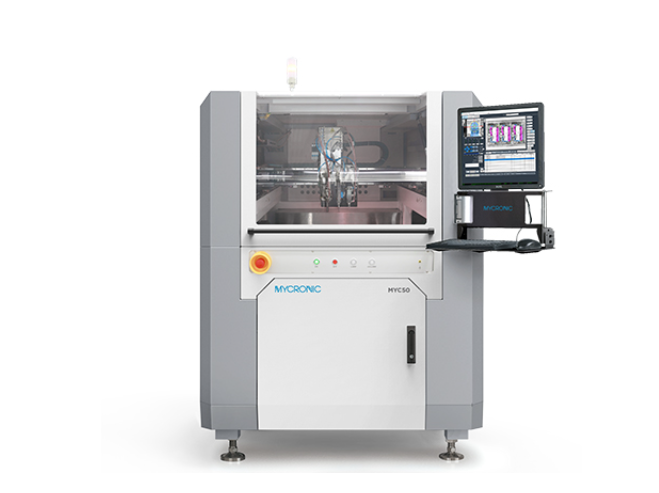
The MYC50 is a high-speed conformal coating system designed for mass production. It supports automated complex coating processes, process-parameter monitoring, and coating-pattern changes without interruption. Optional process control features include fan width control, flow monitoring, and heated fluid systems. Its software-driven workflow illustrates how coating automation can combine production flexibility with process visibility. The practical value of these functions depends on how monitoring settings, recipe management, and quality checks are configured for the application.
Conclusion
Digital process monitoring is changing industrial fluid dispensing by making production conditions easier to observe, compare, and investigate. Its greatest contribution is not simply the collection of machine data, but the ability to connect those records with meaningful quality decisions.
Manufacturers assessing a conformal coating machine should consider measurement relevance, alert logic, traceability, and integration with existing inspection procedures. Axxonauto operates in this evolving field, where data-informed control can help production teams understand process variation and respond to emerging issues with greater clarity.
FAQs
What Is Digital Process Monitoring in Fluid Dispensing?
It is the collection and analysis of machine and process data during production. Depending on the system, monitored variables may include pressure, temperature, motion parameters, cycle time, and coating-program status.
Can Digital Monitoring Detect Every Coating Defect?
No. It can identify abnormal process conditions and patterns associated with defects, but some issues require visual inspection, thickness measurement, or other suitable verification methods.
Which Parameters Matter Most in Conformal Coating?
Relevant parameters vary by material and board design. Common examples include coating speed, valve timing, material pressure, temperature, and programmed path, alongside checks of coverage and film thickness.
How Does Digital Monitoring Support Traceability?
Recorded machine states, recipes, timestamps, and inspection results help engineers connect quality issues with specific production conditions. Consistent data structures are important for meaningful investigations.
Does Digital Monitoring Help With High-Mix Production?
Yes. Recipe records, process histories, and pattern-change information can help teams manage product variation and investigate differences between runs. The system must still be configured around each product’s process requirements.
