

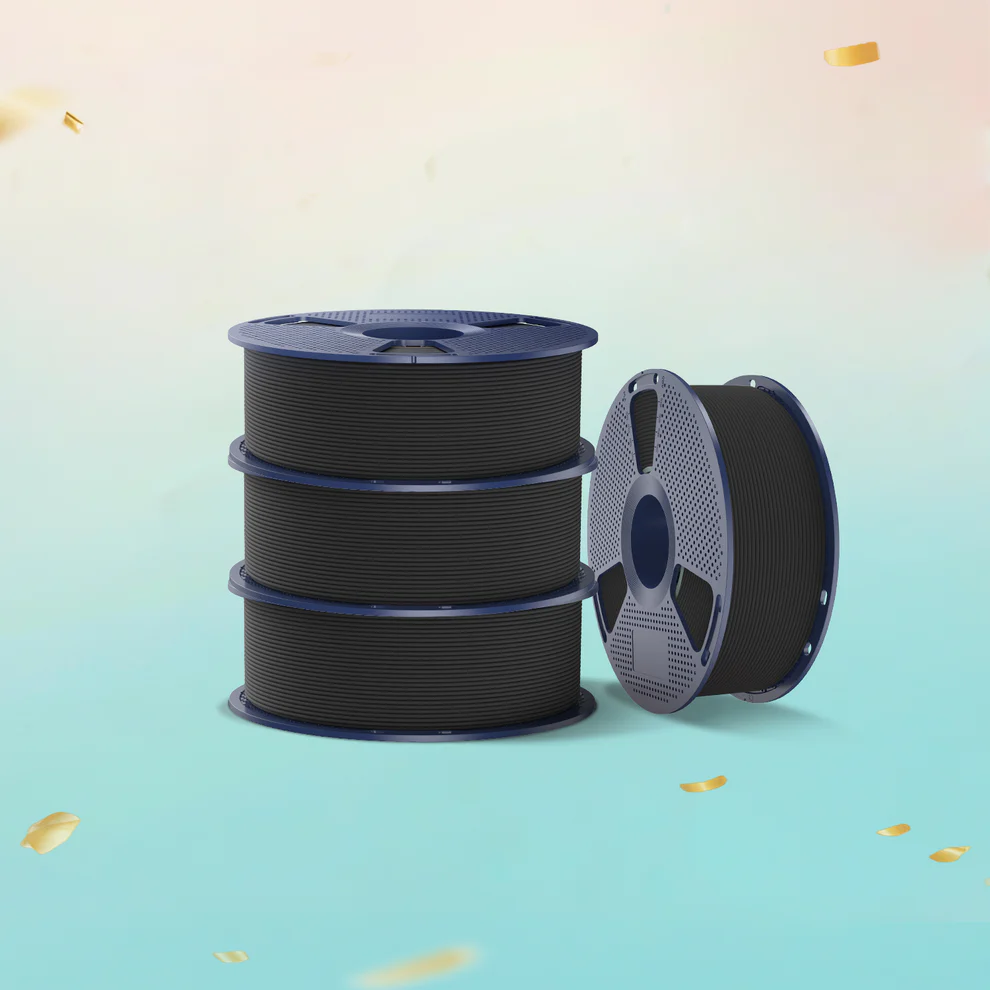
Desktop additive manufacturing has evolved rapidly beyond basic unfilled polymers. When standard materials lack structural rigidity or thermal resistance, composite thermoplastics filled with chopped carbon fibers offer an impressive upgrade for engineering and functional projects.
Among reinforced materials, two popular choices dominate desktop setups. Choosing between composite options requires understanding how base polymer characteristics interact with carbon fiber reinforcement under real-world mechanical loads and environmental conditions.
Understanding Composite Material Mechanics
Chopped carbon fibers added to a base polymer act as internal structural reinforcement. These microscopic strands dramatically increase tensile modulus, dimensional stability, and flexural strength while reducing overall part weight during extrusion.
Additionally, fiber reinforcement significantly minimizes thermal contraction during cooling. Carbon fiber reinforcement can reduce thermal contraction and may help improve dimensional stability, although print warping still depends on the material, printer, geometry, and build conditions.
Furthermore, carbon fiber particles transform the outer visual appearance of printed parts. Extruded objects showcase a premium matte textured surface that effectively conceals microscopic layer lines without requiring manual post-processing.
Thermal Resistance and Environmental Durability
Thermal performance represents a critical dividing line when comparing these composite polymers. Standard PLA composites deform under moderate heat exposure, making them unsuitable for high-temperature enclosures, outdoor automotive components, or engine bays.
In contrast, choosing carbon fiber petg filament provides superior heat deflection temperatures, often enduring ambient environments up to 80°C. This elevated thermal resistance allows structural brackets and electronic housings to maintain shape under continuous heat.
Beyond temperature tolerance, PETG-CF offers excellent chemical resistance against oils, greases, and common workshop solvents. It resists degradation from prolonged ultraviolet sunlight exposure, making it ideal for long-term outdoor mechanical installations.
Printability and Machine Setup Requirements
Ease of processing plays a significant role in material selection, especially for makers operating unheated machines. PLA composite spools remain exceptionally forgiving, requiring lower hotend temperatures and minimal bed warming for reliable adhesion.
Processing petg-cf requires slightly higher hotend temperatures, usually between 240°C and 250°C, alongside moderate bed warming. However, the embedded fibers stabilize molten flow, significantly reducing the stringing issues commonly associated with standard PETG.
Both materials require a hardened steel or ruby nozzle during printing. Chopped carbon fibers are highly abrasive and will rapidly erode standard brass nozzle tips, enlarging the internal nozzle diameter mid-print.
Mechanical Properties: Rigidity versus Impact Strength
While both composites offer superior stiffness over unfilled plastics, their core mechanical behavior differs under load. Composite PLA delivers maximum tensile rigidity, making it extremely stiff but somewhat brittle under sudden physical shocks.
Conversely, SUNLU PETG-CF combines impressive structural stiffness with the inherent impact resistance of glycol-modified polyester. Parts yield slightly under heavy mechanical stress rather than snapping abruptly, making them more durable for active tools.
This balance between flexural strength and impact absorption makes composite PETG ideal for drone frames, functional brackets, and custom automotive mounting solutions subject to continuous physical vibration.
Surface Quality and Aesthetics
Visual appearance is a standout benefit for both composite options. Chopped fibers break up light reflections on outer walls, producing an attractive, non-shiny texture that looks like injection-molded industrial hardware.
Composite PLA renders razor-sharp dimensional details, tight corner geometries, and pristine top surfaces. It handles steep overhangs and unsupported horizontal bridges cleanly, making it perfect for intricate geometric models and decorative housings.
Meanwhile, composite PETG delivers a slightly darker, industrial matte finish that hides layer boundaries effortlessly. Spools engineered by SUNLU maintain uniform fiber distribution, ensuring smooth layer bonding and consistent surface quality across extended print runs.
Dimensional Accuracy and Functional Applications
Dimensional precision is critical when printing interlocking assemblies, mechanical gears, or slide-fit housings. Modern specialty filaments provide exceptional volumetric stability, preventing part expansion or shrinkage after cooling on the bed.
For static display models and rigid fixtures, composite PLA delivers tight tolerances without tweaking flow parameters. However, functional components subjected to repeated stress cycles perform significantly better when extruded with tough carbon fiber petg filament.
Utilizing high-grade spools from SUNLU ensures predictable strand diameters and minimal ovality. This manufacturing consistency helps makers achieve repeatable print dimensions across multiple production batches.
Moisture Sensitivity and Storage Care
All composite thermoplastics absorb atmospheric moisture over time, but their base resins respond differently. Carbon-fiber-filled filaments can still be affected by moisture, so storage and drying conditions should follow the filament manufacturer’s recommendations.
PLA composites absorb moisture slowly, but damp spools produce light stringing and surface pop marks. PETG composites absorb moisture more readily, which can weaken inter-layer adhesion if processed without thorough pre-drying.
Storing your specialty filaments inside sealed storage containers with active desiccant packs is essential. Drying PETG-CF before printing can reduce moisture-related popping, bubbling, and inconsistent extrusion and may improve layer bonding.
Making the Right Choice for Your Build
Selecting the ideal composite spool ultimately depends on your project’s mechanical requirements and operational environment. If your model prioritizes high stiffness, detailed surfaces, and lower processing temperatures, PLA-CF may be a suitable option.
However, if your functional component faces outdoor weather, elevated thermal conditions, continuous physical vibration, or chemical contact, petg-cf stands as the clear winner for structural reliability.
By sourcing quality carbon fiber petg filament engineered by SUNLU, you can upgrade your desktop printer’s capabilities, producing functional parts that combine a matte carbon-fiber appearance with the stiffness and material characteristics of PETG-CF.
