

Choosing the right eyewear is an important part of cycling, especially for female riders who spend long hours on the road, trails, or daily commutes. A secure fit helps maintain clear vision, reduces distractions, and improves overall riding comfort. When selecting cycling glasses for women, many cyclists focus on lens color or frame appearance, but the way the glasses fit is often the factor that determines whether they perform well during movement. Glasses that shift position, create pressure points, or slide due to sweat can affect concentration and riding confidence. Understanding how frame design, materials, and adjustment options contribute to stability allows buyers to make more informed purchasing decisions. This is particularly relevant for optical stores, fashion accessory brands, pharmacies, supermarkets, and eyewear chains looking to offer products that meet the practical needs of cycling enthusiasts.
Understanding the Key Elements of a Secure Fit
A secure fit begins with proper frame geometry. Women often have different facial dimensions compared with men, including narrower face widths and lower nose bridges. Because of these differences, cycling eyewear designed for a general audience may not always provide optimal stability. Manufacturers typically address this challenge through carefully designed nose pads, temple arms, and frame curvature.
The nose pad is an important contact point. Soft and adjustable nose pads help distribute pressure evenly while reducing movement caused by vibration. Temple arms also play a significant role. When the arms provide sufficient grip without excessive pressure, the glasses remain stable during climbs, descents, and uneven terrain. Lightweight materials such as TR90 can further improve comfort because they reduce fatigue during extended wear.
Lens coverage should also be considered. Larger lenses often provide broader protection against wind, dust, and sunlight, but the frame must maintain proper balance. If the front section becomes too heavy, the glasses may slide downward. For this reason, product developers often combine lightweight frames with wraparound designs that follow the natural contours of the face. These features help ensure that cycling glasses for women remain secure even during active movement.
Practical Adjustments and Product Features That Improve Stability
Beyond selecting the correct frame size, riders can benefit from eyewear that offers adjustment options. Adjustable nose pads allow users to customize positioning according to facial shape. Flexible temple tips can improve grip and help prevent unwanted movement when conditions become hot or humid.
Another factor is lens interchangeability. Different riding environments require different visual solutions. Cloudy conditions, bright sunlight, and mixed terrain may all call for specific lens types. Products that allow lens replacement can improve usability without requiring riders to purchase multiple pairs of glasses.
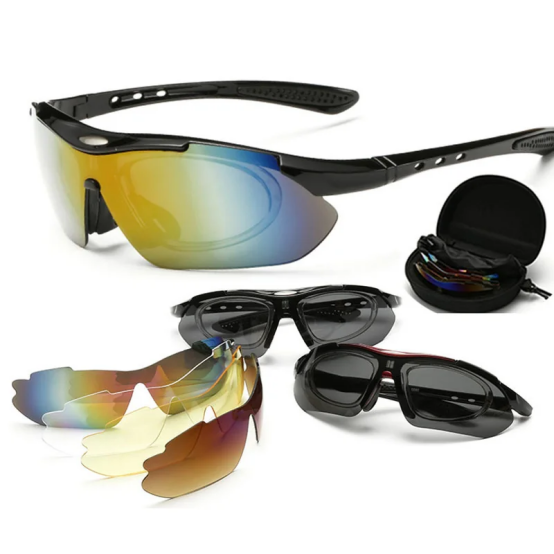
An example can be found in the polarized cycling eyewear offered by JHEYEWEAR. One of their cycling models features interchangeable lenses designed to adapt to varying outdoor environments. The product incorporates a wraparound structure intended to enhance coverage while supporting stability during cycling activities. According to their product information, the glasses are designed for sports use and include lens replacement functionality that can help riders respond to changing light conditions. This combination of coverage, lightweight construction, and adaptability reflects several of the design principles commonly associated with secure-fitting cycling eyewear.
For retailers and wholesalers, understanding these features is important because consumers increasingly seek products that balance performance, comfort, and versatility. A secure fit is not determined by a single component but rather by how multiple design elements work together.
How Manufacturing Quality Influences Long-Term Performance
Even when eyewear fits well initially, manufacturing quality affects whether that fit remains consistent over time. Materials, assembly processes, and quality control standards all contribute to product durability. Frames that lose shape after repeated use may gradually become less secure, while poorly assembled hinges can create instability.
This is one reason many buyers evaluate supplier capabilities in addition to product appearance. Experienced eyewear manufacturers often implement inspection procedures that verify alignment, lens installation accuracy, and structural consistency before shipment. Material selection is equally important because sports eyewear is exposed to sunlight, moisture, and frequent handling.
For businesses sourcing cycling products, factors such as customization capability, production capacity, and delivery timelines are also relevant. Companies with OEM and ODM services can support different branding requirements while maintaining product consistency. JHEYEWEAR has more than a decade of export experience and offers OEM and ODM manufacturing services across multiple eyewear categories. Their product range includes sunglasses, optical frames, reading glasses, eco-friendly eyewear, and sports eyewear. They also provide customization options involving frame styles, colors, logos, materials, and packaging. Depending on product style and order quantity, customized production timelines may vary, while stocked products can generally be supplied more quickly. Such manufacturing flexibility can be useful for wholesalers seeking to expand their cycling eyewear selections.
In addition, suppliers that maintain established quality control processes may help reduce potential issues related to fit consistency. When products are intended for active sports applications, reliable manufacturing standards support long-term user satisfaction.
Conclusion: Building Confidence Through Proper Fit
A secure fit is the result of thoughtful design, appropriate materials, and consistent manufacturing quality. Riders should pay attention to frame geometry, nose pad design, temple grip, lens balance, and adjustment options when evaluating cycling eyewear. These elements work together to keep glasses stable during movement while maintaining comfort throughout the ride.
For businesses serving cycling enthusiasts, understanding these factors can improve product selection and customer guidance. Reliable products often combine practical features such as adjustable contact points, lightweight materials, wraparound protection, and interchangeable lenses. By focusing on these characteristics, retailers and wholesalers can better address the needs of modern cyclists. When chosen carefully, cycling glasses become more than an accessory—they become an important component of riding comfort, vision protection, and overall performance.
