

Expanding cutting capacity is not always the same as improving factory output. Some manufacturers reach a point where thicker materials, larger order volumes, or repeated production delays make their existing equipment increasingly restrictive. Others may benefit more from better scheduling or material handling than from a higher-powered laser source.
Evaluating a 20 kW fiber laser cutting machine requires a close look at workload patterns, material requirements, facility readiness, and the financial return expected from additional capacity. Hymson Laser Machinery operates in the industrial laser equipment market, where the practical value of an investment depends on how well machine capabilities correspond to real production conditions.
Identify the Workload That Justifies Higher Power
Order history offers a useful starting point. Manufacturers should review which jobs consume the most machine hours, which orders regularly create backlogs, and how often production requires thicker plate processing. Occasional jobs that exceed existing capacity may justify outsourcing or scheduling adjustments rather than a major equipment purchase. By contrast, recurring orders that occupy substantial cutting time can provide a stronger basis for evaluating a higher-powered system.
The number of parts produced matters, but the composition of those parts matters just as much. Long straight cuts, intricate contours, frequent piercing, and dense nesting patterns place different demands on cutting equipment. Higher power may shorten processing time under suitable conditions, yet the benefit varies according to geometry and process settings. Production teams should compare cycle times from representative jobs instead of assuming that every part will become faster at the same rate.
Bottlenecks outside the cutting process deserve equal attention. If operators spend significant time loading sheets, sorting finished parts, waiting for programs, or moving material between workstations, additional laser capacity may not increase factory output proportionally. A high-power laser cutting machine is most relevant when cutting performance itself limits production, rather than when the real constraint lies elsewhere in the workflow.
Assess the Material Mix and Process Requirements
Material selection has a direct influence on whether higher power is useful. Carbon steel, stainless steel, and aluminum differ in their cutting behavior, while surface condition, thickness, and required edge quality influence suitable processing parameters. A workshop handling a broad material range should identify the combinations that occur regularly and test them under realistic conditions. Maximum cutting thickness alone does not reveal whether a machine can deliver the required quality and consistency across daily orders.
Thicker sections may benefit from increased available power, particularly when they account for a substantial share of production. However, acceptable results also depend on cutting speed, focal position, assist gas, nozzle selection, and the characteristics of the material itself. The best comparison includes edge condition, dimensional accuracy, dross, and downstream processing requirements. If parts require extensive grinding or rework after cutting, nominal speed gains may not translate into better overall productivity.
Check Infrastructure Before Expanding Capacity
A higher-powered system may place different demands on the facility’s electrical supply, cooling arrangements, ventilation, and extraction equipment. Before comparing quotations, engineering teams should confirm the required utilities, installation conditions, safety provisions, and available floor space. Material storage and loading routes also need attention, especially if larger sheets or heavier workpieces will become more common. Early site assessment can reveal additional costs that are easy to overlook during equipment selection.
The wider production line should be reviewed as well. Higher cutting output may create pressure on deburring, bending, welding, inspection, or packing if those processes cannot handle the extra volume. Mapping the route from raw sheet to finished component helps identify where additional capacity will be useful and where supporting changes may be necessary. In some facilities, investment in handling equipment or downstream processes may provide more value than increasing laser power alone.
Calculate the Production Economics
The financial case should compare realistic annual operating scenarios rather than theoretical maximum output. Relevant variables include expected utilization, achievable cycle times, labor, electricity, assist gases, consumables, maintenance, rejected parts, and the value of additional production capacity. A higher initial investment may be justified if it reduces recurring outsourcing costs or allows the factory to accept profitable orders that current equipment cannot handle. Conversely, low utilization can make additional capacity expensive to maintain.
Sensitivity analysis helps account for uncertainty. Buyers can estimate returns under conservative, expected, and high-demand scenarios, varying the assumptions for order volume, uptime, and processing time. This approach shows whether the investment remains viable if demand grows more slowly than expected or if production gains fall short of initial estimates. Financial comparisons should also account for installation costs and any upgrades needed elsewhere in the facility.
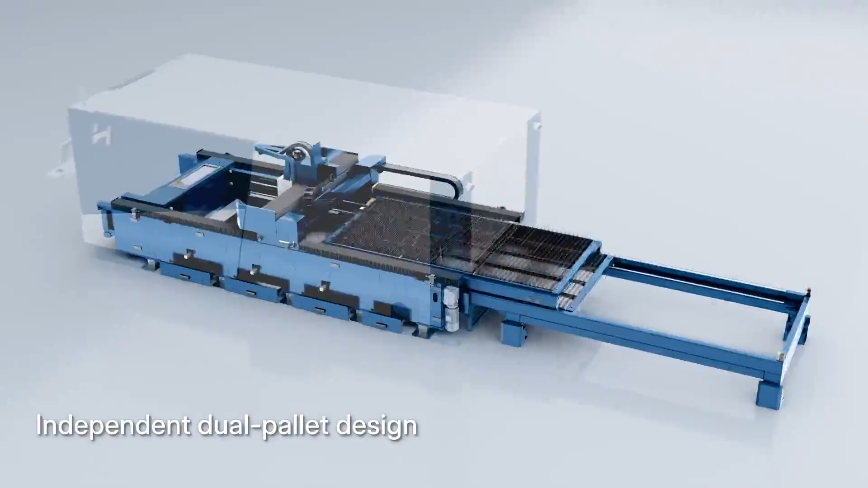
Technical validation should support the economic forecast. The Hylaser PRO series is available with 6 kW, 12 kW, and 20 kW laser power options, allowing manufacturers to compare configurations against their production requirements. A trial using actual materials, representative parts, and agreed quality criteria can help verify expected cycle times before a final configuration is selected. Results from these trials provide a more dependable basis for comparing a high-power laser cutting machine with existing equipment or alternative investment options.
Conclusion
Moving to higher laser power makes sense when recurring workload, material demands, and production economics support the change. The decision should follow evidence from job histories, realistic cutting trials, facility assessments, and downstream capacity reviews rather than a preference for the largest available specification.
Hymson Laser Machinery can be evaluated through the same objective process as any industrial equipment supplier, using documented capabilities and verified operating results. The long-term value of a 20 kW fiber laser cutting machine depends on whether its additional capacity solves persistent production constraints and contributes to sustainable improvements in factory performance.
