

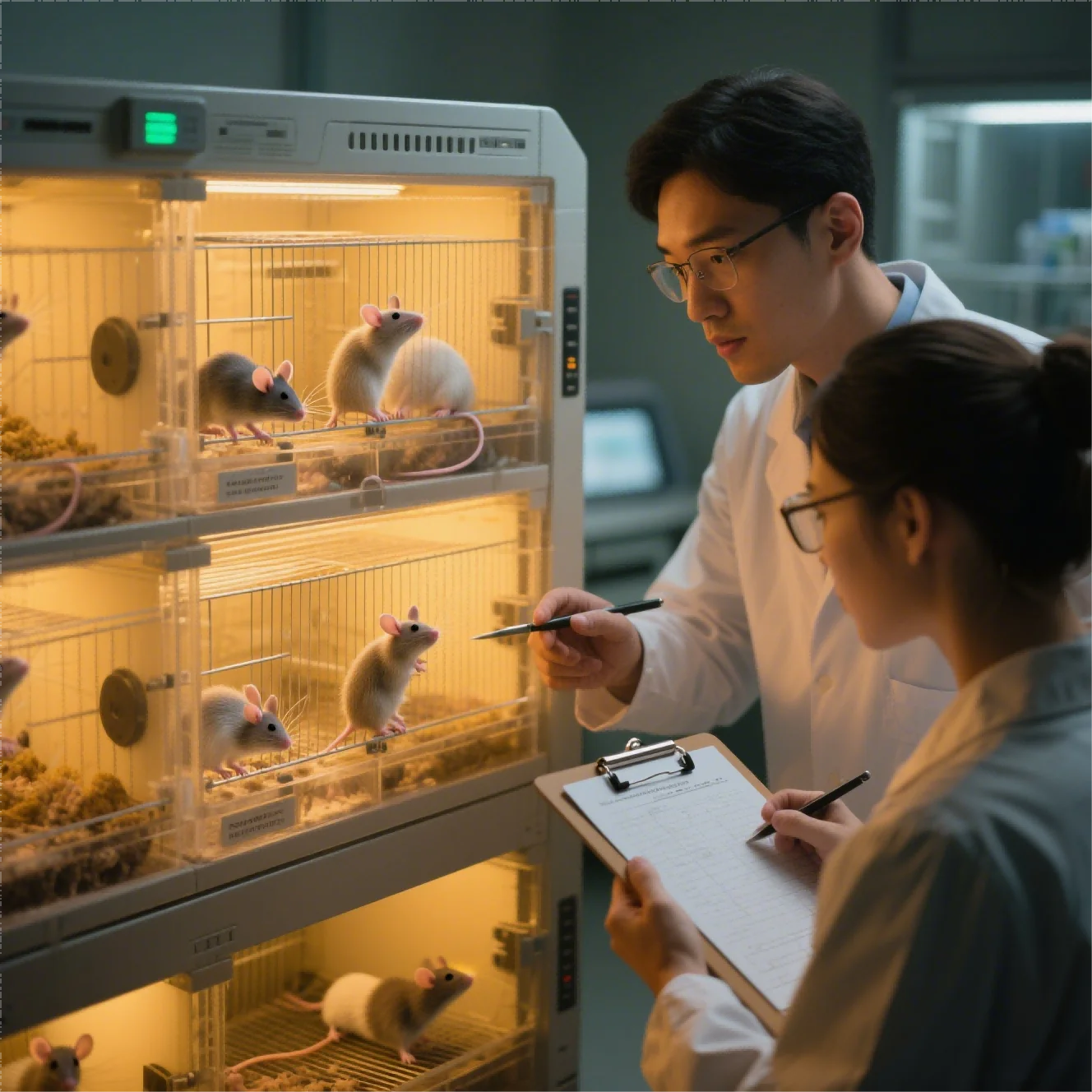
Randomization charts often provide the first warning of poor engraftment: too few tumors qualify, baseline sizes spread widely, or implantation dates create uneven treatment windows.
The underlying variation may have begun weeks earlier in cell recovery, passage history, injection preparation, operator technique, or animal condition. Take rate is only one measure of model performance.
Latency, growth consistency, biological stability, procedure-related loss, and the proportion of animals entering balanced groups determine whether the established tumors can support an efficacy comparison.
A cdx mouse model program gains reliability when the cell resource, host strain, implantation route, matrix, and monitoring schedule fit the research question. Prospective eligibility rules prevent late exclusions from reshaping the cohort after treatment begins.
Teams improve establishment by controlling measurable inputs throughout the process. Pilot cohorts, batch records, operator tracking, and defined acceptance windows allow technical causes to be separated from model biology.
Study teams use the resulting evidence to refine later studies without relying on a single headline percentage. Small pilots expose technical failure modes before scarce animals, test material, and scheduling capacity are committed.
Tumor Cell Resource Selection and Qualification
Cell identity is the first control. STR authentication, contamination testing, passage history, morphology, growth behavior, and target expression must be reviewed before inoculation. If a study uses a resistant or engineered line, the relevant phenotype may be confirmed under the same culture conditions used to prepare the implant.
According to the Jennio Biotech resource library, more than 1,000 human and murine cell lines cover multiple cancer types. A broad library can improve model matching, but the selected line still needs project-specific evidence.
Historical take rate, growth curve, latency, variability, and response to a known control are more informative than catalog size alone. Preparation produces a consistent cell suspension with documented concentration and handling time. Excessive delay, poor viability, or variable preparation can change the effective inoculum.
The protocol defines how cells are counted, released, transported, and assigned to animals, as well as what happens when release criteria are not met. The biology of the line also fits the endpoint. Rapid growth may suit screening but compress the treatment window.
Slow growth may increase attrition and study duration. A line with the correct target but unstable expression can undermine mechanism studies. Route-specific tradeoffs require attention before the first cohort is implanted. Operators record cell handling time, injection quality, anesthesia conditions, and recovery observations.
Those details often explain uneven tumor establishment. Cell suspensions benefit from release criteria covering viability, concentration, aggregation, contamination, and time outside controlled culture conditions. Injection preparation records make it possible to connect a failed cohort with a specific handling deviation.
Biology-Matched Implantation Routes
Subcutaneous implantation offers accessible tumor measurement and a standardized format for routine screening. Orthotopic placement provides a more relevant organ environment for studying local growth, invasion, metastasis, or tissue-specific response.
Intravenous and other dissemination approaches serve different questions and require distinct monitoring and success criteria. The chosen cdx mouse model design therefore must reflect the decision, not a preference for the highest apparent take rate.
Technical ease does not establish biological fit. Conversely, a complex orthotopic procedure may add variability without benefit when the immediate need is candidate ranking or dose exploration. Operator training matters most when the route requires microsurgery or precise injection.
The provider standardizes anesthesia, preparation, implantation location, volume, and post-procedure monitoring. Imaging confirms placement or early burden when tumors are not directly measurable, but imaging settings and analysis methods also require control.
Animal strain, sex, age, health status, and housing influence establishment. Animal and housing variables require consistent, documented control. Welfare monitoring belongs beside technical success measures.
Procedure-related distress, infection, or excessive burden can alter tumor growth and reduce cohort interpretability. Jennio Biotech maintains historical take-rate records by cell line, passage, batch, operator, and implantation date, allowing reviewers to assess whether establishment remains reproducible.
Randomization may occur only after prespecified eligibility checks, with balancing methods that avoid placing unusually large or small tumors in one arm. Host variables also affect establishment.
Age, sex, immune status, microbiological environment, acclimation, housing density, and procedure timing may shift latency or growth, so cohort comparability begins before implantation. Trend review across cohorts and operators reveals whether an improvement remains stable under routine operating conditions.
Prospective Tumor-Take and Randomization Criteria
Engraftment performance belongs on a dashboard, not in a single take-rate claim. Latency, qualification rate, growth variability, procedure-related loss, operator, passage, batch, and implantation date together reveal where improvement is occurring.
A connected CDX workflow brings model establishment, tumor measurement, body-weight tracking, imaging, pathology, and reporting into the same service context. Project review can then focus on how failed implants, replacement animals, staggered cohorts, and exclusions enter the calculation.
Stable establishment improves ethics as well as statistics. Fewer unusable animals, more balanced baselines, and clearer eligibility criteria reduce waste before treatment begins.
The next study becomes stronger when the previous one leaves an operational record. Engraftment improves through accumulated control of inputs and technique, with biological relevance kept ahead of a headline percentage. Teams that track results across studies use every completed cohort to plan the next establishment attempt.
