

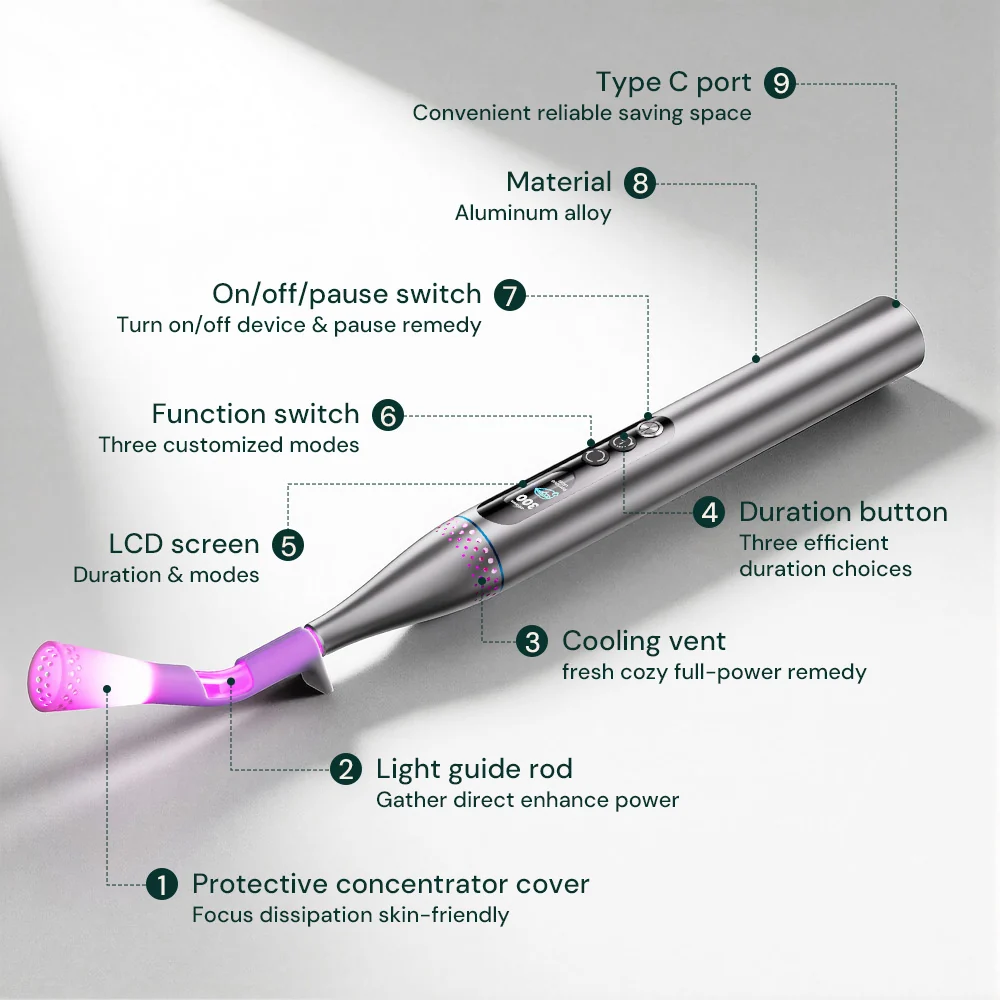
Choosing a light-based skincare device can be confusing, especially when different wavelengths are designed for different purposes. A red and blue light therapy wand combines multiple light options, allowing users to explore different approaches to supporting skin wellness. Understanding how red light and blue light differ can help consumers make more informed decisions when selecting a device for their personal care routines.
How Red and Blue Light Therapy Wand Technology Uses Different Wavelengths
Light therapy devices work by delivering specific wavelengths of light to the skin. Unlike traditional heat-based approaches, red light therapy and blue light applications rely on targeted light energy. The wavelength determines how the light interacts with the skin, which is why different colors are often discussed separately in wellness and skincare fields.
A red and blue light therapy wand typically combines red light and blue light because each wavelength has different characteristics. Red light commonly refers to wavelengths around 600–700 nm, while blue light is generally found in the 400–500 nm range. Some devices also include near-infrared (NIR) light, which is invisible to human eyes but has different penetration characteristics.
Red Light at 660nm and Its Role in Skin Wellness
Red light at 660nm is one of the commonly researched wavelengths in photobiomodulation (PBM). Research has explored how red light interacts with biological processes, including its relationship with cytochrome c oxidase in mitochondria. This interaction may support cellular energy processes by influencing ATP production, which provides energy for normal cellular activities.
Because of these characteristics, red light is often included in wellness devices designed for skin appearance and general recovery routines. Many users choose red light options as part of skincare habits focused on maintaining healthy-looking skin, supporting collagen-related processes, and promoting overall skin wellness.
A red and blue light therapy wand with a 660nm red light option gives users access to this wavelength in a convenient handheld format. However, results can vary depending on factors such as usage habits, device specifications, wavelength accuracy, distance, and exposure time.
Blue Light at 460nm and How It Differs from Red Light
Blue light works differently from red light because it belongs to a shorter wavelength range. Blue light at 460nm has been studied for its interaction with certain surface-level microorganisms. Research suggests that blue light may create reactive substances when absorbed by some bacteria, which is why it has become a popular feature in many skincare-focused light devices.
Compared with red light, blue light generally has less penetration depth. Instead, it is often discussed in relation to surface skincare applications. This makes blue light a different option rather than a replacement for red light.
For consumers comparing a red and blue light therapy wand, understanding this difference is important. Red light and blue light are not competing technologies; they represent separate wavelength approaches that can be selected based on individual skincare preferences and wellness goals.
Combining Red Light, Blue Light, and NIR in One Device
Some modern handheld light devices combine several wavelengths to provide more flexibility. The Wandia Handheld Red Light Therapy Wand from LifeZoom is designed as a 3-in-1 device featuring blue light at 460nm, red light at 660nm, and NIR light at 850nm.
The three wavelength options allow users to choose different light settings according to their personal skincare routines. The 660nm red light focuses on photobiomodulation principles related to cellular energy processes, while the 460nm blue light is designed around research involving light interaction with certain bacteria.
The inclusion of 850nm NIR adds another wavelength option. Since NIR is invisible to the human eye, users should not judge its performance by brightness. Like other light-based technologies, factors such as irradiance, delivered energy, application distance, and recommended usage time are important considerations.
What to Consider When Choosing a Light Therapy Device
When selecting a red and blue light therapy wand, consumers should look beyond simple specifications such as the number of LEDs or total wattage. A higher wattage rating does not automatically mean a device delivers a more suitable light dose. Proper wavelength output and controlled energy delivery are important factors.
Users may also consider the device design. A handheld wand can provide portability and allow targeted application areas, making it suitable for people who prefer flexible skincare routines. Comfort, ease of operation, and consistency of use are also practical factors that influence the overall experience.
Scientific research on light-based wellness technologies continues to develop. While studies have explored potential applications of different wavelengths, individual results may vary, and light devices should be viewed as part of a broader wellness routine rather than a replacement for professional skincare advice.
Understanding the Value of Multi-Wavelength Light Wellness
The main difference between red and blue light comes from their wavelengths and how they interact with the skin. Red light at 660nm is commonly associated with photobiomodulation research and cellular energy processes, while blue light at 460nm is often discussed in relation to surface-level skincare support.
A red and blue light therapy wand provides a practical way for consumers to explore both wavelength options in one device. With its combination of 460nm blue light, 660nm red light, and 850nm NIR light, the Wandia Handheld Red Light Therapy Wand from LifeZoom offers a multi-wavelength approach for individuals interested in incorporating light-based technology into their wellness routines. For those looking for a science-oriented skincare device, explore LifeZoom’s wellness solutions and contact the LifeZoom team for more information.
