

Selecting the right circuit breaker is an important part of electrical system design. Although vacuum circuit breakers (VCBs) and air circuit breakers (ACBs) both provide circuit protection and switching functions, they are designed for different voltage ranges and operating environments. Choosing between them based only on device preference can result in an unsuitable protection scheme.
For engineers, electrical contractors, panel builders, and system integrators, the more practical approach is to first identify the system voltage, load characteristics, installation environment, and protection requirements. These factors help determine which electrical control products are appropriate for the application.
Understanding the Basic Difference Between VCB and ACB
The main distinction between VCB and ACB is the medium used to extinguish the electrical arc during interruption. A VCB uses a vacuum interrupter, while an ACB uses air as the arc-extinguishing medium.
VCBs are commonly associated with medium-voltage power distribution systems. They are often applied in substations, industrial distribution networks, transformers, motors, and other installations where medium-voltage switching and protection are required.
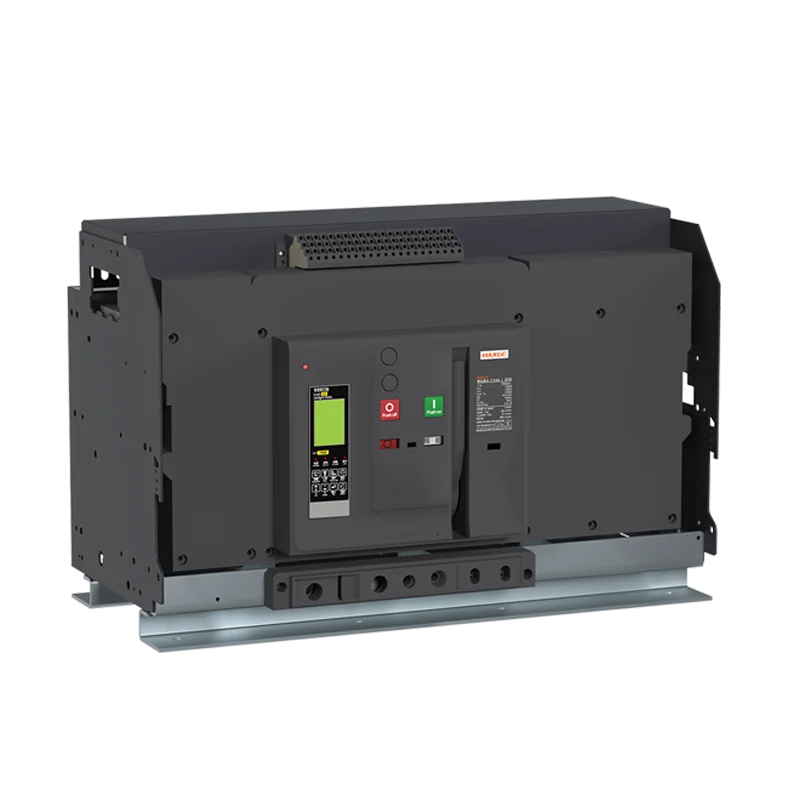
ACBs are generally designed for low-voltage applications and are widely used in main distribution panels, switchboards, generator protection systems, and large commercial or industrial electrical installations. Their functions can include overload protection, short-circuit protection, switching, and coordination with other protective devices.
Therefore, the question is not simply whether a VCB or ACB is a better product. The first consideration should be whether the breaker matches the voltage level and electrical architecture of the system.
Voltage Level Should Come First
Voltage is one of the most important parameters when selecting a circuit breaker. A breaker must be rated for the actual operating voltage of the installation and have appropriate insulation and interruption capabilities.
A low-voltage air circuit breaker is typically used in low-voltage distribution systems where high current capacity and adjustable protection are required. These breakers are commonly installed as incoming breakers or feeder protection devices in distribution equipment.
By comparison, a high-voltage air circuit breaker is a different category and should not be treated as interchangeable with conventional low-voltage ACBs. The terminology used for air circuit breaker types can vary between markets and standards, so engineers should always verify the manufacturer’s rated voltage, insulation level, breaking capacity, and applicable standards before selection.
VCBs are generally considered when the system operates at medium voltage and requires vacuum interruption technology. Their construction and operating mechanism are designed around the requirements of higher-voltage distribution equipment.
This makes voltage classification the logical starting point. Selecting the breaker first and considering voltage afterward can create unnecessary design and compatibility problems.
Application Conditions Also Influence the Selection
Voltage alone does not determine the appropriate breaker. The application and operating conditions also need to be evaluated.
For example, an ACB may be suitable for a main incoming circuit in a factory distribution panel because the installation requires high current capacity, adjustable protection settings, and coordination with downstream breakers. An ACB may also be selected for generator or busbar protection where its control and protection functions fit the overall distribution system.
A VCB, on the other hand, may be more appropriate for medium-voltage transformer feeders, industrial substations, or motor control applications where vacuum interruption is suitable for the operating voltage and switching requirements.
The expected frequency of switching, available fault current, installation space, maintenance requirements, and protection coordination should also be considered. A technically correct breaker rating is only part of a reliable electrical protection strategy.
Look Beyond Breaker Type When Choosing Electrical Control Products
Circuit breakers are part of a broader electrical control system. Selection should therefore consider how the breaker works with other electrical control products, including contactors, protection devices, distribution components, and monitoring equipment.
For an ACB installation, engineers may need to evaluate rated current, rated short-circuit breaking capacity, trip unit functions, communication capabilities, and installation configuration. For VCB applications, attention may also be required for vacuum interrupter performance, operating mechanism, insulation characteristics, and medium-voltage switchgear compatibility.
Standardization is another practical consideration. Using compatible products across a project can simplify procurement, installation, maintenance, and replacement. Documentation and technical support are equally important when projects involve multiple ratings or customized distribution configurations.
A Practical Selection Process
A straightforward selection process can reduce errors. First, determine the system’s nominal voltage and frequency. Next, identify the continuous operating current and prospective short-circuit current. Then evaluate the load type, installation environment, switching frequency, protection functions, and coordination requirements.
After these parameters are established, compare suitable air circuit breaker types or VCB configurations according to their technical ratings. The final choice should be based on verified specifications rather than terminology alone.
It is also important to check whether the selected equipment complies with the relevant electrical standards and project requirements. Manufacturer documentation should provide clear information about rated voltage, current, breaking capacity, insulation performance, trip characteristics, and installation conditions.
Why Manufacturer Support Matters
Circuit breaker selection can become more complicated when a project involves multiple voltage levels, different load types, or specific panel configurations. Access to accurate technical information can make the selection process more efficient.
MAXGE provides a range of electrical control products for different electrical distribution and protection requirements. Reviewing product specifications before making a selection can help users identify equipment that matches their system parameters and application conditions.
When additional information is required, engineers and purchasing teams can contact MAXGE to discuss product specifications, application requirements, and suitable configurations. Technical communication at the planning stage can help reduce compatibility issues later in the project.
Choosing Based on System Requirements
The comparison between VCB and ACB should ultimately begin with the electrical system rather than the device itself. ACBs are commonly associated with low-voltage distribution and high-current applications, while VCBs are generally used for medium-voltage switching and protection. Within the ACB category, different air circuit breaker types and configurations can address different operating and distribution requirements.
By evaluating voltage level, current, fault conditions, load characteristics, protection functions, installation environment, and system coordination, users can make a more informed decision. The selected electrical control products should fit the complete electrical architecture rather than meet only one isolated specification. MAXGE supports this application-oriented approach with a broad low-voltage product portfolio covering circuit protection, distribution, and control, with solutions also extending to PV, energy storage, and EV charging applications.
Its product development is supported by an R&D team, automated manufacturing at its Deqing and Wuhu bases, and testing capabilities including CNAS-related laboratory resources and international certifications. For detailed product information or application guidance, you can contact MAXGE to discuss the electrical requirements and available solutions before finalizing your circuit breaker selection.
