

Corrosion testing laboratories frequently encounter erratic creepage measurements and conflicting rust ratings across identical test batches. Such discrepancies can result from inconsistent sample preparation, changes in solution chemistry, variations in fog atomization, or differences in the coating itself. Building a dependable routine requires treating the cabinet as a thermodynamic environment governed by strict mechanical tolerances.
Accelerated environmental testing demands precise execution across every phase of cabinet operation, reducing procedural variance between shifts ensures that corrosion ratings reflect genuine material properties rather than chamber instability. Laboratories establishing structured operational routines achieve tight alignment with ASTM B117, ISO 9227, and OEM cyclic corrosion specifications.
Specimen Preparation and Controlled Surface Scribing
Sample preparation determines whether corrosion initiates legitimately along coating defects or prematurely around panel edges. Raw cut edges, mounting holes, and back faces must be sealed with inert vinyl tape, wax, or non-reactive protective coatings. Without appropriate edge protection, exposed substrate edges may corrode prematurely, allowing corrosion to spread beyond the intended evaluation area and affect the results.
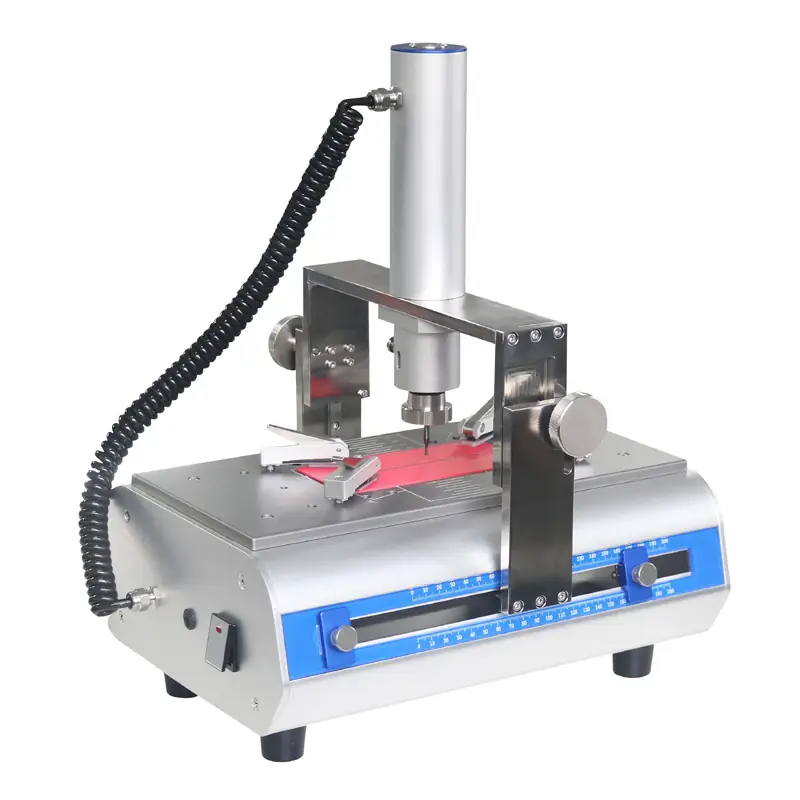
Manual scribing introduces substantial operator bias through uneven tool pressure, blade chatter, and variable penetration depths. Modern testing routines utilize mechanized tools like the BGD 539 Electric Scribe Marks Machine, developed by BIUGED INSTRUMENTS, to cut uniform, burr-free fissures down to the metal substrate. Standardizing scribe geometry ensures that rust creepage measurements represent actual underfilm corrosion velocity rather than variable scratch damage.
Proper specimen placement is essential for achieving consistent exposure conditions during corrosion testing. Test panels should be positioned according to the applicable testing standard and the equipment manufacturer’s recommendations to support uniform exposure to the corrosive environment. Specimen spacing and arrangement should also minimize interference between samples and prevent condensate or runoff from one specimen from affecting others. Following consistent specimen preparation and placement procedures helps improve the reliability and comparability of test results.
Electrolyte Preparation and Saturator Tower Thermal Balance
Electrolyte consistency governs the chemical severity of neutral salt spray testing. Formulating test solutions requires high-purity sodium chloride dissolved in deionized water to achieve a 50 ± 5 g/L concentration, representing a 5% salt fraction. For neutral salt spray testing, verify the pH of the collected spray solution according to the applicable standard. ISO 9227 specifies a pH range of 6.5–7.2 at 25 ± 2 °C for NSS testing.
Compressed air entering the atomization nozzle must undergo pre-humidification inside a pressurized saturator tower. Passing clean compressed air through a heated-water saturator conditions its temperature and moisture content before atomization. The saturator temperature should be adjusted according to the chamber operating conditions and the applicable test method. Unconditioned dry air strips water from airborne droplets, creating hyper-concentrated salt crusts that choke normal oxidation.
Maintaining thermal equilibrium throughout a salt spray test chamber prevents internal temperature stratification. Armoured titanium alloy electric heating elements positioned beneath the reservoir warm the internal atmosphere to 35 ± 2 °C with a temperature uniformity of ± 2 °C. Maintaining the specified chamber temperature helps stabilize the exposure environment and supports consistent fog deposition during extended tests.
Atomization Dynamics and Fog Collection Calibration
Aerosol generation relies on stable pneumatic pressure governed by a dual-stage regulation system. Set the compressed-air supply and atomization pressure according to the chamber manufacturer’s specifications and the applicable test method. Verify that the pressure remains stable throughout exposure. Glass atomizing nozzles can generate salt spray under controlled air-pressure and solution-supply conditions. Regularly inspect the nozzle and verify fog collection rates to identify changes in atomization performance.
Validating mist volume requires positioning clean collection funnels at specified locations across the specimen zone. Each standard 80 cm² horizontal funnel must gather between 1.0 mL and 2.0 mL of solution per hour over a continuous 16-hour verification window. If the collection rate falls outside the specified range, inspect the air supply, nozzle condition, solution delivery, and collector placement before adjusting the equipment according to the manufacturer’s instructions.
Graduated cylinders linked to internal funnels permit real-time external monitoring without interrupting exposure cycles. Technicians must log collected volume, specific gravity, and collection-point pH daily to verify that atomized fog matches source parameters. Unexpected changes in collected salt concentration should prompt checks of the prepared solution, solution supply, air-conditioning system, and measurement procedure.
Chamber Atmosphere Containment and Preventive Servicing
Corrosive fog containment demands durable structural materials and reliable physical seals. Premium test cabinets utilize molded PVC construction rated up to 65 °C paired with a transparent acrylic canopy. A perimeter water seal helps limit salt fog leakage around the cabinet cover. Appropriate laboratory ventilation, routine seal inspection, and safe operating procedures remain necessary to manage aerosol exposure.
Exhaust management systems prevent internal pressure buildup that could alter droplet trajectories. A 48 mm drainage and fog exhaust port vents spent aerosol out of the workspace while preventing backdrafts from disturbing mist distribution. Operating a programmable salt spray test chamber like the BGD 880/S or BGD 881/S allows automated chamber purging with fresh air before canopy opening, preventing aerosol exposure during specimen inspections.
Routine maintenance schedules prevent salt crystallization from obstructing internal pneumatic and fluid circuits. Technicians must periodically flush delivery lines with warm deionized water, descale humidifying tower heating elements, and verify low-water alarm trip points. Neglecting fluid pathways creates localized pressure spikes that distort spray geometry and ruin multi-week corrosion sequences.
Standardizing Corrosion Reliability with BIUGED INSTRUMENTS
Achieving reproducible corrosion data across multi-year testing regimes demands equipment built to rigorous engineering standards. BIUGED INSTRUMENTS manufactures advanced corrosion instrumentation designed to reduce mechanical drift and maintain flawless testing repeatability. Their comprehensive lineup spans compact 108-liter units like the BGD 880/S up to expansive 800-liter programmable chambers, delivering precise thermal control and robust atomization.
Backed by an ISO 17025-accredited calibration center, BIUGED INSTRUMENTS holds nearly 100 patents and actively contributes to ISO and ASTM international standards development. Their technical team provides guidance helping laboratories select and operate an optimal salt spray test chamber configured for strict industrial compliance. Contact their application specialists today to request equipment specifications and enhance your laboratory corrosion testing reliability.
