

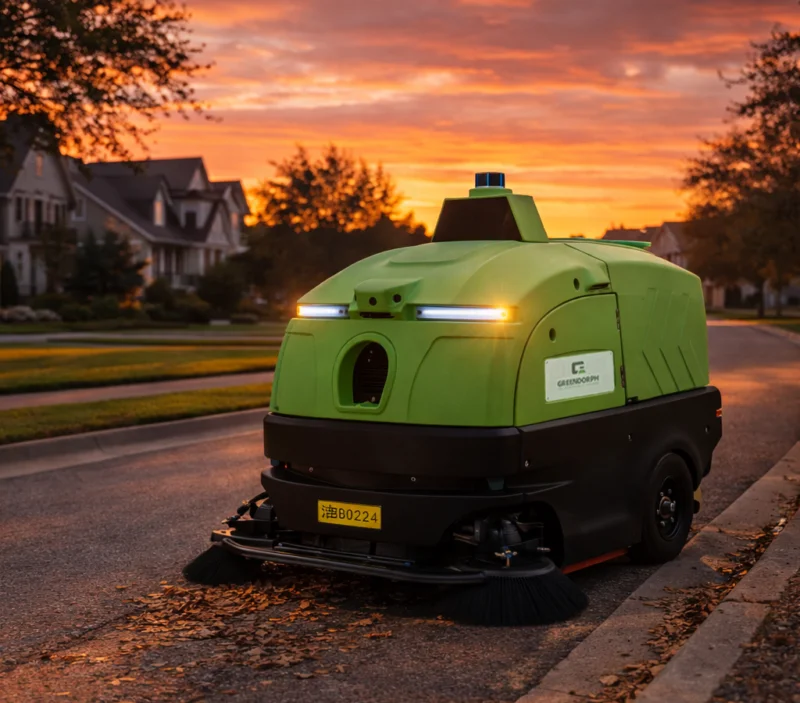
The most dominant trend in the industrial sanitation sector for 2026 is the rapid advancement of full-stack autonomous navigation systems. Modern facilities are moving away from simple “bump-and-turn” sensors in favor of sophisticated 360-degree environmental perception. Leading manufacturers like Greendorph are at the forefront of this shift, utilizing a proprietary combination of LiDAR, ultrasonic sensors, and high-definition cameras to ensure safe and flexible obstacle avoidance. This technology allows a robot floor cleaner to operate in high-traffic environments—such as transportation hubs and busy industrial parks—without constant human oversight. By implementing AI-driven path planning, these machines can reduce repetitive cleaning by up to 40%, optimizing energy use and ensuring that every square meter of a facility is maintained with surgical precision. This level of autonomy represents a shift from reactive cleaning to a proactive, intelligent maintenance strategy that addresses the global labor shortage.
Transitioning to 100% Electric and Sustainable Power Solutions
Sustainability has evolved from a secondary corporate goal to a baseline requirement for any floor cleaning machine automatic system. In 2026, the industry is seeing a complete phase-out of traditional internal combustion engines in favor of high-capacity lithium (LFP) battery technology. The 100% electric revolution, which is a core mission highlighted on the Greendorph official website, allows for zero-emission operation. This is critical for both indoor air quality and meeting global ESG (Environmental, Social, and Governance) standards. These electric systems, such as the 48V/200 AH batteries found in the flagship YJ130 model, provide an average operating time of six to eight hours. This shift not only reduces the carbon footprint of urban and industrial maintenance but also drastically lowers noise pollution, enabling facilities to conduct “dawn patrol” cleaning in residential areas without causing community disruption.
Multi-Functional Cleaning with Intelligent Dust Suppression
The third major trend is the consolidation of multiple cleaning tasks into a single, multi-functional autonomous unit. Traditional methods that required separate machines for sweeping, suctioning, and misting are being replaced by “all-in-one” solutions. As detailed on the Greendorph product page, units like the YJ80 and YJ130 feature a primary cleaning system enhanced by three auxiliary functions: negative-pressure suction, airflow-assist, and atomized misting spray. This intelligent dust suppression technology is vital for maintaining health and safety standards in high-dust environments, such as logistics parks, where reducing human exposure to airborne hazards is a priority. By integrating high-pressure surface flushing and water-spraying capabilities, these machines achieve a cleaning efficiency of over 95%, handling everything from fine dust and cigarette butts to larger industrial waste in a single, efficient pass.
The Rise of Data-Driven “Fleet Command” Management Platforms
In 2026, the role of the traditional janitor is transforming into that of a “fleet commander,” thanks to the rise of intelligent management platforms. Modern robotic floor cleaners are now fully integrated into cloud-based ecosystems and mobile apps, providing real-time cleaning data analytics and remote operation capabilities. This digital integration allows managers to monitor square footage covered and battery health, and even receive “garbage overflow” alerts from a centralized dashboard. According to recent industry reports, this connectivity addresses the labor crisis by allowing a single operator to manage a fleet of multiple robots across massive areas—such as the 180,000 square meters often found in major transit hubs. This trend toward “Smart Sanitation” ensures total transparency in maintenance operations and allows for predictive maintenance, which significantly reduces machine downtime and extends the overall lifecycle of the equipment.
Extreme Environment Adaptability and Specialized Maneuverability
The final trend shaping the industry is the development of machines designed for extreme conditions and complex architectural layouts. Modern robot floor cleaner units are no longer confined to flat, indoor warehouse floors; they are now engineered with quad-independent suspension and dual-wheel differential drives capable of climbing 10-degree slopes. This adaptability has been proven in extreme weather conditions, where certain models have operated continuously in -25°C blizzards with a failure rate of less than 1.5%. Furthermore, the industry is focusing on “zero-edge cleaning” to ensure that curbs, walls, and narrow urban districts are maintained without the need for manual touch-ups. As urban environments grow more complex, the ability for a floor cleaning machine automatic system to handle diverse surfaces—from asphalt and cobblestone to marble and cement—ensures that the technology remains a versatile and reliable asset for smart cities worldwide.
Global Scaling and the Future of Autonomous Hygiene
As we look toward the future of 2026, the scaling of robotic cleaning fleets is becoming a standard practice for international corporations. Reliability is no longer just about the hardware but about the global support network that ensures these machines remain operational. Reliable suppliers provide 24/7 technical assistance and specialized training for their distributors, ensuring that localized repairs can be handled with top priority. This global reach allows for the rapid deployment of autonomous technology across continents, from European shopping malls to Asian industrial zones. By investing in these advanced systems, businesses are not only improving their immediate cleanliness standards but are also future-proofing their operations against rising labor costs and stricter environmental regulations.
Conclusion: Embracing the Robotic Revolution in Sanitation
In conclusion, the top trends in the automatic floor cleaning industry are defined by a move toward smarter, cleaner, and more autonomous technology. From the integration of 360-degree LiDAR perception to the 100% electric mission of companies like Greendorph, the industry is providing solutions that are as environmentally responsible as they are efficient. By choosing a robot floor cleaner that offers over 95% cleaning recovery and 6–8 hours of runtime, facility managers can ensure a pristine environment with minimal human intervention. As AI algorithms continue to improve, these machines will become even more adept at navigating our world, turning the difficult task of large-scale sanitation into a streamlined, automated process.
