

Behind a rising parking barrier, an image of an approaching vehicle has been converted into information and evaluated against an operating rule. Automatic number plate recognition, or ANPR, supplies the plate identifier used in that evaluation. Parking management adds the records, decisions, messages, and control outputs surrounding recognition. The visible movement at the entrance is the result of several connected responsibilities, each receiving a different kind of information.
Starting a Capture Event
Capture begins with a trigger that requests an image at a particular moment. Video triggering uses activity observed in the camera view, while a vehicle loop supplies a detection input from the lane. Within LPR parking management systems, this event establishes when the camera’s observation enters the recognition stage. The loop signal and the resulting image have different contents: the former reports presence; the latter provides visible plate detail.
The optical equipment supplies the image material. A lens determines the camera’s view, and supplementary lighting contributes illumination when the existing light is insufficient. In an ANPR parking management system, these functions precede reading the characters. The trigger initiates capture; the resulting image contains the visual detail available for interpretation.
A moving vehicle presents changing views as it approaches the entrance. Capturing its plate while the characters are visible gives the next stage relevant material to work with. The capture event also provides context for the observation: an image taken for one passage belongs to that event, rather than becoming an access permission by itself.
Converting Characters Into a Usable Identifier
The plate number initially exists as shapes and contrast in a picture. Recognition interprets those characters and produces an identifier that software can use. An ANPR parking management system can then associate that identifier with relevant vehicle information. The image and the interpreted text remain different forms of evidence about the same event.
Matching introduces a further operation. A readable plate string provides a reference for locating a registration, permission, or parking record, depending on the site’s arrangement. The record used by LPR parking management systems supplies information that the photograph cannot contain, such as the vehicle’s registered access status or the parking transaction associated with its visit.
These distinctions explain how an event can be investigated. If the interpreted characters differ from the image, attention goes to capture or recognition. If the identifier matches the image but points to unexpected information, the record association becomes the relevant question. Locating that difference keeps image interpretation and business data from being treated as one indistinguishable operation.
Applying Access and Payment Rules
Management logic receives the identifier and evaluates the associated information against the site’s rules. A registered vehicle may have access permission, while a parking visit may require a payment decision. In LPR parking management systems, the identifier provides the lookup reference; the applicable rule determines the instruction that can be issued.
The same recognized plate can therefore produce different outcomes as the associated status changes. Permission and payment are inputs to a decision, not properties visible in the characters. For an ANPR parking management system, a complete event includes that decision and its basis before the information passes to a display or barrier controller.
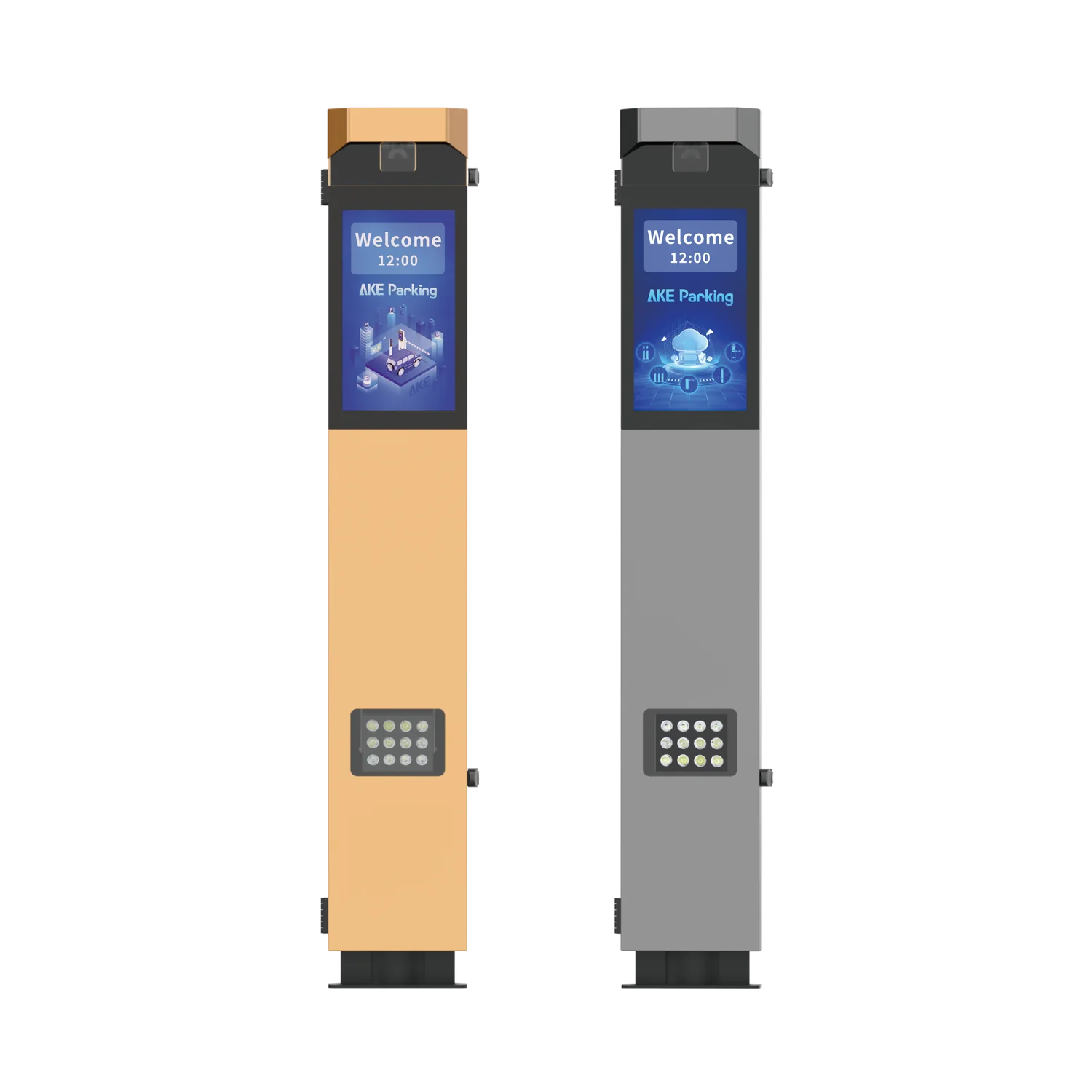
The capture, control, and payment stages share an enclosure in AKE Parking’s Pro LPR Controller. Its camera, control electronics, LED fill lighting, 12.1-inch display, and parking payment software form an integrated terminal for office buildings, residential communities, industrial parks, and commercial facilities. This arrangement brings several processing responsibilities together while retaining their distinct roles in the event.
Sending Messages and Control Outputs
Once a decision is available, the entrance equipment translates it into driver information and a control instruction. A display can communicate access status or present a payment interaction, while the barrier receives the relevant command. The output stage in LPR parking management systems connects the decision to what happens visibly at the lane.
Pro’s color LCD displays QR codes, access messages, and graphical interactions, with configurable voice prompts. Its industrial ARM platform and integrated switch support as many as four network ports, alongside TCP/IP and RS485 interfaces. Display communication and connections between devices carry different parts of the event through to the equipment responsible for responding.
Capture specifications belong to the selected device. Pro uses a 5MP camera and fixed 6mm lens, supporting Guangdong, Hong Kong, and Macao plates below 20km/h. The separate All-in-One LPR Camera also uses a 5MP camera and fixed 6mm lens, with recognition supported from 0 to 40km/h. These are distinct recognition ranges for different hardware arrangements.
An ANPR parking management system can distribute its responsibilities across existing equipment and a management service. Customers’ hardware can feed AKE Parking software; SaaS access comes through subscriptions. The agreed interface identifies what each device sends and how the receiving software uses it. Integration joins the adjacent stages so that an evaluated event reaches the intended output.
Tracing one plate event reveals where each responsibility sits: capture supplies an image, recognition supplies an identifier, management supplies a decision, and output equipment delivers the message or action. An unexpected result can be examined at the stage where the information changed. Responsibility becomes clear at each transition, showing how an observed plate becomes a message or a controlled action at the parking entrance.
