

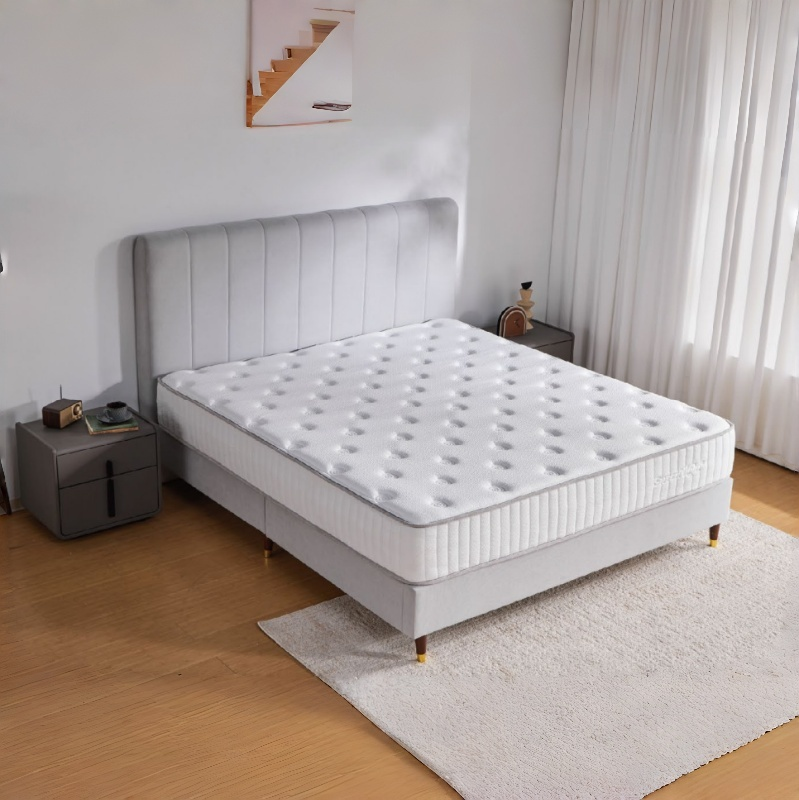
Replacement orders expose gaps in incomplete hotel mattress specifications. A hotel with several bed bases, different room classes, and a planned replacement cycle cannot choose effectively from a product photograph alone. The purchase has to work in the physical room, feel acceptable to a broad range of guests, and remain possible to repeat when beds are replaced. A useful buying process therefore starts with the property’s own requirements and only then moves to a supplier’s available constructions.
This order matters because a comfortable sample may have the wrong height, a suitable size may be difficult to move through the building, and a workable first shipment may lack a clear replacement specification. Each decision needs enough detail to connect the candidate mattress to the intended room group.
Set a Room Standard Before Comparing Models
Access to a guest room can rule out mattresses before guests test them. The inside dimensions of each bed base, desired finished bed height, access route, and number of units belong on the schedule. Rooms with the same platform can often share a specification; exceptions need their own identifiers. The hotel also has to decide which comfort characteristics are essential across its guest population and which may vary by room class.
Construction should be described in usable terms. Spring design, comfort layers, edge support, cover fabric, finished height, and packaging all influence installation or guest experience. Firmness labels by themselves are difficult to compare across producers. An approved sample gives the hotel a physical reference, while measurements and layer descriptions explain what the bulk order must reproduce. The two forms of evidence serve different purposes.
A hotel mattress manufacturer can discuss options more productively when the project brief states quantities and room groups. A single mattress may be comfortable in a showroom, but the hotel needs to know how that choice behaves across its actual bed frames and how later units will be identified. The brief turns an attractive model into a candidate for a defined part of the property.
Read Product Pages as Comparable Specifications
Product pages become comparable when measurements and construction details identify a room group, not just a photograph. Height, spring structure, edge treatment, foam combination, fabric, packed form, and available size changes should be recorded for each candidate. A higher profile may alter the look of a guest room or the fit of existing bedding. Different foam layers can change pressure feel without implying that one model is universally better.
Suisin Furniture’s hotel-mattress section currently presents MT-203, MT-206, MT-208, MT-209, and MT-210. MT-203 is listed at 25 cm high with a 1.8 mm smart pocket-spring system, 2.0 mm edge-support wire, high-density and bamboo-charcoal foam, and knitted fabric. MT-206 has a 32 cm construction with gel memory foam and other foam layers. These published differences are useful for a shortlist, but the hotel still needs samples and confirmed specifications for the chosen room standard.
The model pages say dimensions and fabrics can be customized, and several designs use vacuum-compressed packaging. Those choices should be considered alongside the hotel’s bed bases and receiving arrangements. A compressed carton may be easier to route through storage or corridors, while suitability and recovery have to be confirmed for the selected design. A hotel mattress supplier can clarify which packing method applies to each ordered model instead of treating the whole category as one format.
Approve the Experience in a Real Room
A trial installation tests questions that a catalog cannot answer. The mattress can be measured on the actual base, paired with the property’s bedding, and used to check finished bed height. Hotel staff can assess whether the corners are accessible for bed making and whether the edges feel stable during ordinary use. Guest testing, where practical, can reveal differences between a brief showroom impression and an overnight stay.
The comparison needs a consistent method. Across candidate trials, a constant bed base and bedding isolate mattress differences; notes can then separate comfort, movement, edge feel, and handling during a routine room turnover. A hotel mattress manufacturer cannot interpret the word “comfortable” precisely, but it can respond to a defined sample and a list of accepted construction features. If the preferred sample needs a change, approval should refer to the revised version rather than the earlier model name.
Translate Approval Into an Order
Before ordering, the hotel needs a model identifier, sample reference, dimensions, construction, cover, packaging method, quantity by room group, and delivery sequence. A schedule for receiving and storing mattresses can matter as much as the quoted production date. The property should also identify who checks the first arrivals and how a discrepancy will be reported before installation continues.
A hotel mattress supplier should support replacement planning as part of the buying cycle. Suisin Furniture can preserve the approved version for later hotel reorders. A hotel may need one mattress years after the original project, when staff and product details have changed. Keeping the approved specification and sample record allows that order to be compared with the installed standard. The best purchase is the one that remains clear after the first shipment has left the loading dock.
