

Off-grid boating is changing as owners and operators pay more attention to energy use, comfort, and system reliability. Marine climate systems now need to work with limited power sources while maintaining stable performance during long voyages. ZhuoliMarine focuses on marine air conditioning solutions for boats, yachts, and offshore platforms. They develop equipment that matches the practical needs of B2B marine projects, including efficiency, durability, and installation flexibility.
Why Energy Efficiency Matters in Modern Marine Applications
Energy efficiency has become an important factor when selecting marine climate equipment. Boats operating away from shore power often depend on battery systems, solar solutions, or other onboard energy sources. A suitable air conditioning system should provide comfortable temperatures without creating unnecessary energy pressure on the vessel’s power system.
For many marine operators, a DC boat air conditioner offers a practical option because it can connect directly with DC power systems. This design reduces the need for additional power conversion equipment and helps simplify system integration. Efficiency standards are becoming a key reference point for vessel builders and equipment suppliers.
Modern marine projects also consider operating conditions beyond basic cooling capacity. Factors such as noise levels, corrosion resistance, maintenance access, and long-term stability influence purchasing decisions. Commercial boat manufacturers and service providers usually evaluate these details before choosing climate control equipment for different marine environments.
DC boat air conditioner Efficiency Standards for Future Vessels
The development of marine air conditioning systems is closely related to inverter technology. Variable-speed compressors can adjust output according to temperature changes, helping reduce unnecessary energy consumption. This approach supports more stable operation and allows equipment to respond to different onboard conditions.
A DC boat air conditioner with inverter technology can provide more precise temperature management compared with traditional fixed-speed systems. For vessels that operate for extended periods, this technology helps balance comfort requirements and power limitations. It is especially useful for yachts, work boats, and offshore platforms with specific energy planning needs.
Efficiency benchmarks also include heat exchange performance. Marine systems often use seawater cooling environments, which require suitable materials and structural designs. Heat exchangers with corrosion-resistant components can support consistent performance when equipment faces saltwater exposure and changing weather conditions.
Material Selection and Protection in Marine Climate Systems
Marine environments create challenges for equipment because saltwater, humidity, and vibration can affect components over time. For this reason, manufacturers need to consider protective materials and reliable structures during product development. Stainless steel housing, waterproof motors, and corrosion-resistant heat exchangers are common design elements in marine air conditioning systems.
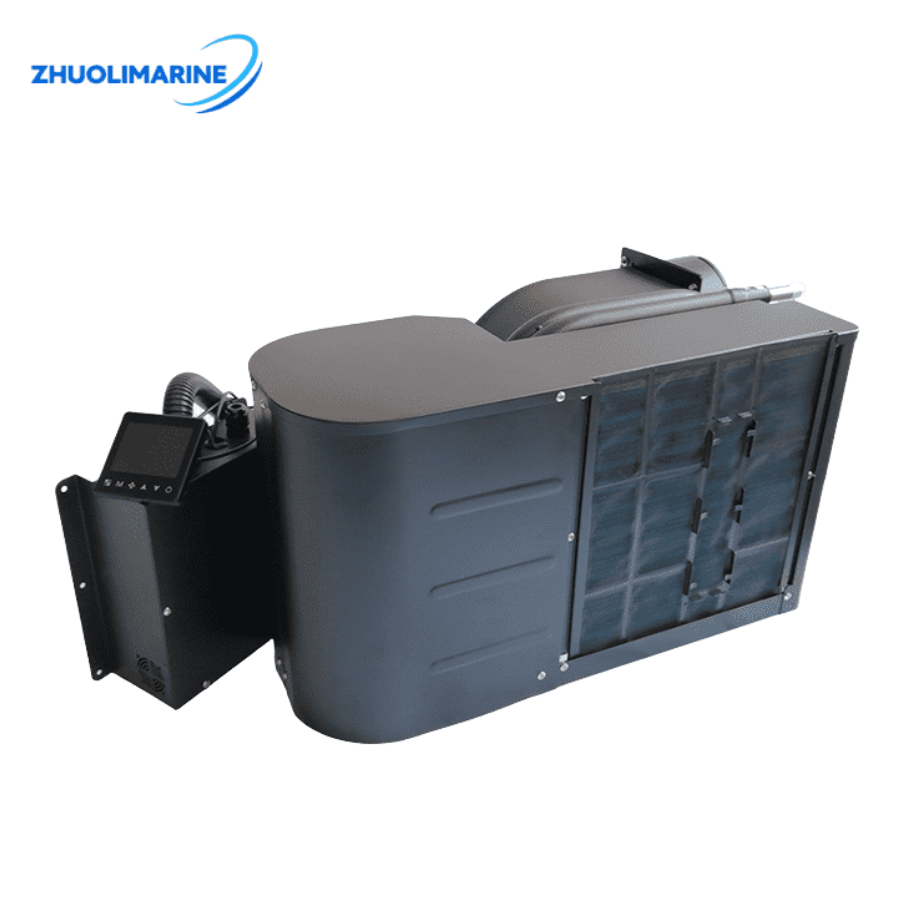
ZhuoliMarine provides the MAR-48V/09BP model, a 48V DC marine air conditioner designed for boats, yachts, and offshore platforms. They offer a compact self-contained system with 9,000 BTU cooling and 10450 BTU heating capability. The unit uses 48V DC inverter technology, a titanium alloy condenser tube heat exchanger, and a 304 stainless steel housing with electrophoretic anti-corrosion coating.
The MAR-48V/09BP also includes an IP68-rated centrifugal vortex outer-rotor motor. This motor design supports quieter airflow operation and improved protection against water and corrosion. The smart electronic expansion valve adjusts refrigerant flow according to operating conditions, helping maintain cooling efficiency while reducing system stress.
Smart Control Features Improve User Experience
Digital control functions are becoming another consideration in marine equipment selection. Boat owners and operators increasingly look for systems that provide convenient monitoring and adjustment. Smart control features can help users manage temperature settings without requiring frequent manual operation.
The built-in WiFi remote control of the MAR-48V/09BP allows users to check system performance and adjust settings through mobile devices. This function can support easier operation during different stages of a voyage. For fleet operators and marine service companies, convenient control features can also improve daily equipment management.
Beyond smart functions, installation requirements remain important for professional users. Compact structures, suitable voltage options, and maintenance-friendly designs can help reduce difficulties during vessel construction or equipment upgrades. These factors are often considered during marine project planning.
Future Trends in Off-Grid Marine Cooling Solutions
The growth of off-grid marine applications is encouraging further development of efficient climate systems. As vessels adopt more battery-based energy solutions, air conditioning equipment needs to work effectively with modern power architectures. Low energy consumption, stable output, and durable materials will continue to influence product selection.
A reliable DC boat air conditioner solution can support different marine scenarios where energy management is important. From private yachts to commercial offshore platforms, users are paying more attention to lifecycle performance rather than only initial equipment costs. This trend creates new requirements for manufacturers to improve design, materials, and control technologies.
The future of marine cooling will likely combine efficient power use with stronger environmental adaptability. Equipment suppliers that understand marine conditions can provide solutions that match the changing expectations of shipbuilders, distributors, and engineering partners.
Supporting Marine Projects with Professional Manufacturing Experience
When selecting marine air conditioning equipment, buyers need suppliers that understand both product performance and application requirements. ZhuoliMarine specializes in marine air conditioning solutions with a focus on R&D, manufacturing, and practical marine applications. They provide equipment featuring DC inverter technology, corrosion-resistant structures, and smart control options for professional marine projects. Contact ZhuoliMarine to discuss suitable marine climate solutions for your next project.
