

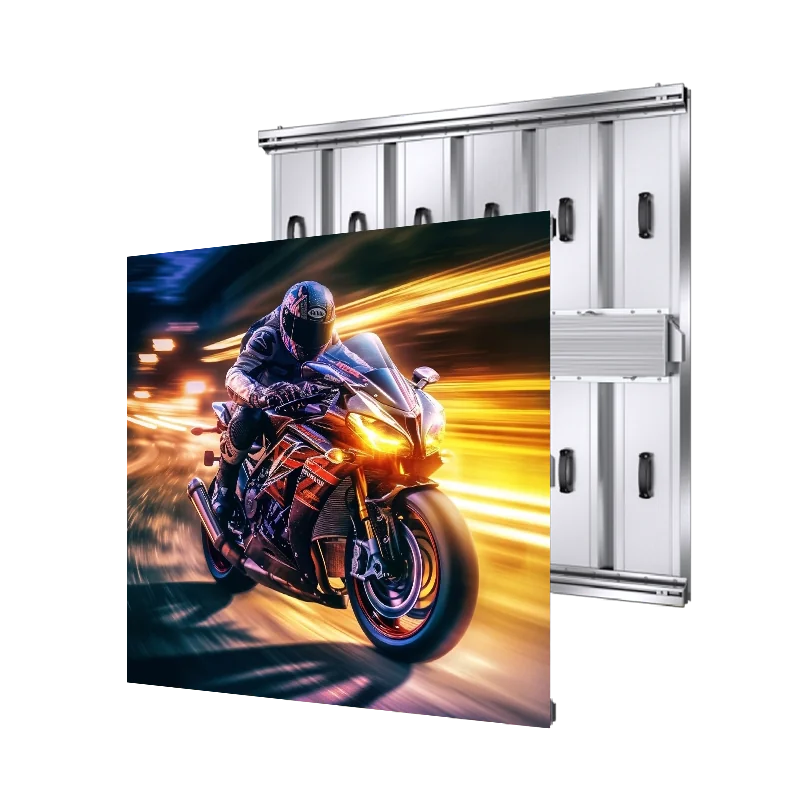
Outdoor digital displays help businesses communicate with large audiences across commercial plazas, stadiums, transportation hubs, and public advertising locations. However, successful deployment requires more than selecting a display with strong brightness. Structural support, weather exposure, electrical infrastructure, viewing angles, content systems, and maintenance access all affect long-term performance.
For commercial property owners, advertising operators, and system integrators, careful planning can reduce installation risks and avoid costly modifications after deployment. HDC, a provider of commercial and creative LED display solutions, offers the AluSlim Outdoor Series for applications that require visibility, weather resistance, and consistent image presentation in outdoor environments.
Assess the Installation Site Before Selecting Equipment
The first step is to evaluate the physical environment where the display will operate. Site conditions determine the appropriate mounting method, technical specifications, and infrastructure requirements.
Check Visibility and Ambient Lighting
An outdoor LED screen must remain readable under the lighting conditions expected at its location. Direct sunlight, reflections from nearby buildings, and changing daylight levels can affect the viewing experience. Brightness should therefore be selected according to the installation environment rather than based on maximum output alone.
Viewing distance also influences pixel pitch and display dimensions. A roadside advertising installation viewed from a distance may have different resolution requirements from a screen installed near pedestrian traffic. Planners should assess typical audience positions, viewing angles, surrounding obstructions, and the speed at which viewers pass the display.
Evaluate Structural Support and Wind Loads
Outdoor installations must account for the weight of the display, its supporting structure, and environmental forces. Wind loading is particularly important because a large screen can present a substantial surface area to strong gusts. Wall-mounted, pole-mounted, and freestanding installations may each require different structural arrangements.
A qualified structural engineer should assess the building or foundation, mounting hardware, local wind conditions, and applicable building regulations. The design should also account for access during installation and future servicing. Selecting the display before confirming structural feasibility can lead to unnecessary redesigns or delays.
Choose Weather-Resistant Display Technology
Outdoor equipment faces rain, dust, temperature fluctuations, and prolonged exposure to sunlight. The selected display should have protection ratings and construction characteristics suited to the site’s actual conditions. Buyers should confirm what the stated protection level covers, including whether it applies to the front, rear, or other components of the assembled installation.
Waterproofing, Dust Protection, and Safety
The HDC AluSlim Outdoor Series features an IP65+ front-and-rear protection specification. Its waterproof and dustproof design is intended to help resist rain, wind-driven moisture, and dust pollution in outdoor environments. This makes protection specifications an important consideration for projects in exposed commercial locations.
The series is also described as using refractory materials, with a stated flame-retardant level of VD. Procurement teams should request the relevant technical documentation and verify how the rating applies to the complete product and installation. Local fire codes, cable routing, ventilation requirements, and emergency access must still be addressed as part of the overall design.
Brightness, Contrast, and Viewing Consistency
High brightness helps outdoor content remain visible in daylight, while contrast and refresh rate influence image presentation. The AluSlim Outdoor Series is designed for high-brightness operation, vivid contrast, and a high refresh rate, supporting applications such as outdoor advertising, stadium displays, commercial plazas, and transportation hubs.
Flatness also matters, especially when viewers can see the display from oblique angles. HDC’s AluSlim design uses an aluminum bottom shell to address deformation-related inconsistencies associated with conventional plastic bottom shells after assembly. This construction is intended to improve surface flatness and visual consistency across wider viewing angles. Buyers should still assess sample images and the finished assembly under representative viewing conditions.
Plan Power, Signal, and Content Integration
A display installation needs reliable power distribution and a stable signal path. Before installation, integrators should confirm the available electrical capacity, circuit protection, grounding, cable routes, and isolation arrangements required by local codes. Outdoor connections should use components and enclosures appropriate for the exposure conditions.
Content integration also deserves early attention. The playback system, control hardware, network connection, and content management workflow should be compatible with the display configuration. For advertising operators, remote content updates may simplify campaign scheduling across multiple locations, but network access, security, and backup procedures need to be planned rather than assumed.
A commissioning plan should define how image quality, brightness settings, signal stability, and protective measures will be checked before handover. Testing should include representative content and, where practical, operating conditions similar to those expected at the site.
Prepare for Installation, Maintenance, and Long-Term Operation
Installation planning should include the entire service lifecycle, not just the initial construction phase. Outdoor displays may require periodic inspections, cleaning, component replacement, and troubleshooting. Maintenance access should be incorporated into the site design, particularly for installations mounted at height or above busy public areas.
The AluSlim Outdoor Series is designed for stable 24/7 operation. However, continuous operation depends on appropriate installation, correct configuration, and adherence to operating and maintenance instructions. Project teams should establish inspection schedules, clarify service responsibilities, and confirm warranty coverage before commissioning.
Environmental exposure should also inform the maintenance plan. Inspection frequency may need to reflect local weather patterns, dust levels, and the installation’s proximity to roads or industrial sites. A documented service process helps operators identify potential problems before they interrupt scheduled advertising or public information services.
Deliver a Reliable Outdoor Display Project
A successful outdoor LED screen installation depends on coordinated decisions about site conditions, structural engineering, environmental protection, electrical supply, content integration, and ongoing maintenance. Addressing these factors early helps businesses control project risks and establish realistic expectations for performance and operating costs.
HDC‘s AluSlim Outdoor Series offers features including IP65+ front-and-rear protection, an aluminum bottom shell for improved flatness, high-brightness image presentation, and a stated flame-retardant level of VD. These specifications provide useful starting points for evaluating suitability, but each project should verify technical documentation, local compliance requirements, and installation conditions before procurement.
For property developers, advertising operators, and system integrators, the most effective approach is to coordinate equipment selection with engineering and operational planning from the beginning. That preparation helps create outdoor display installations that serve their intended audiences while remaining practical to operate and maintain over time.
