

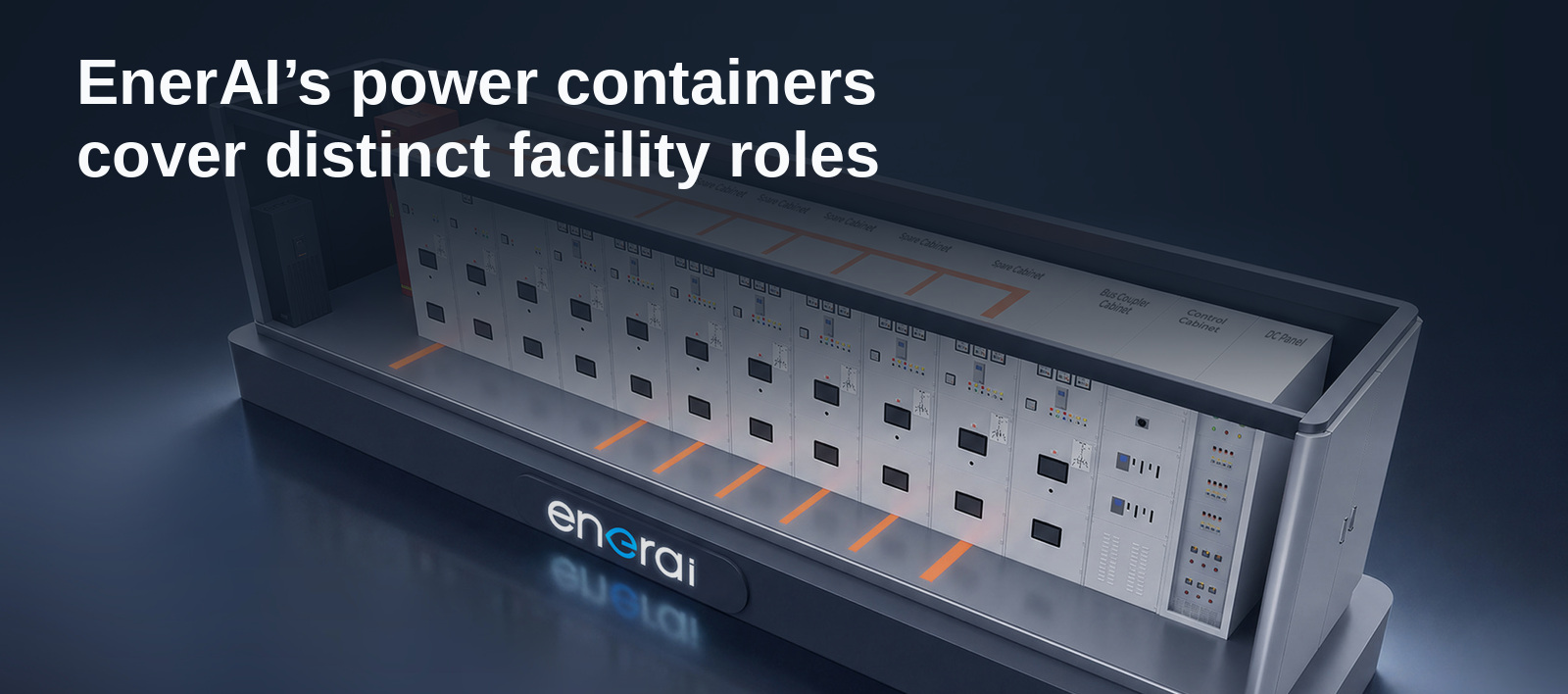
EnerAI offers four prefabricated power container families for AI data centers: medium-voltage, low-voltage, SST and lithium-ion battery containers. Each package has a different job in the facility, from upstream distribution to backup. Together they show what EnerAI means by integrated prefabrication and give Southeast Asian projects several ways to define the work they want completed at the factory.
Medium- and low-voltage containers serve different parts of the site
EnerAI describes the Medium Voltage Power Container as a distribution hub linking the energy supply and facility power areas of a data center. Its product overview highlights standardized cabinet sets, a compact arrangement and convenient daily maintenance. This gives the container a distribution role within the prefabricated range. The description is distinct from the direct power conversion function assigned to EnerNeo and the SST Power Container elsewhere in the company’s portfolio.
The Low Voltage Power Container serves a different portion of the system. EnerAI describes it as an integrated package combining a dry-type transformer, an uninterruptible power supply and low-voltage distribution. The company offers configurable AC and DC architectures for this product. A facility can therefore discuss the low-voltage package in terms of the loads it is intended to serve and the electrical interface selected for that block.
The SST container brings conversion into the prefabricated package
The SST Power Container illustrates EnerAI’s ability to integrate one of its main power electronics capabilities into a broader facility product. The company describes the package as combining power supply, cooling and low-voltage systems. It converts medium-voltage input to 800V DC in a single stage. For a program using that architecture, the EnerAI AIDC power solutions portfolio includes a package centered on facility conversion as well as other equipment that can sit upstream or downstream of it.
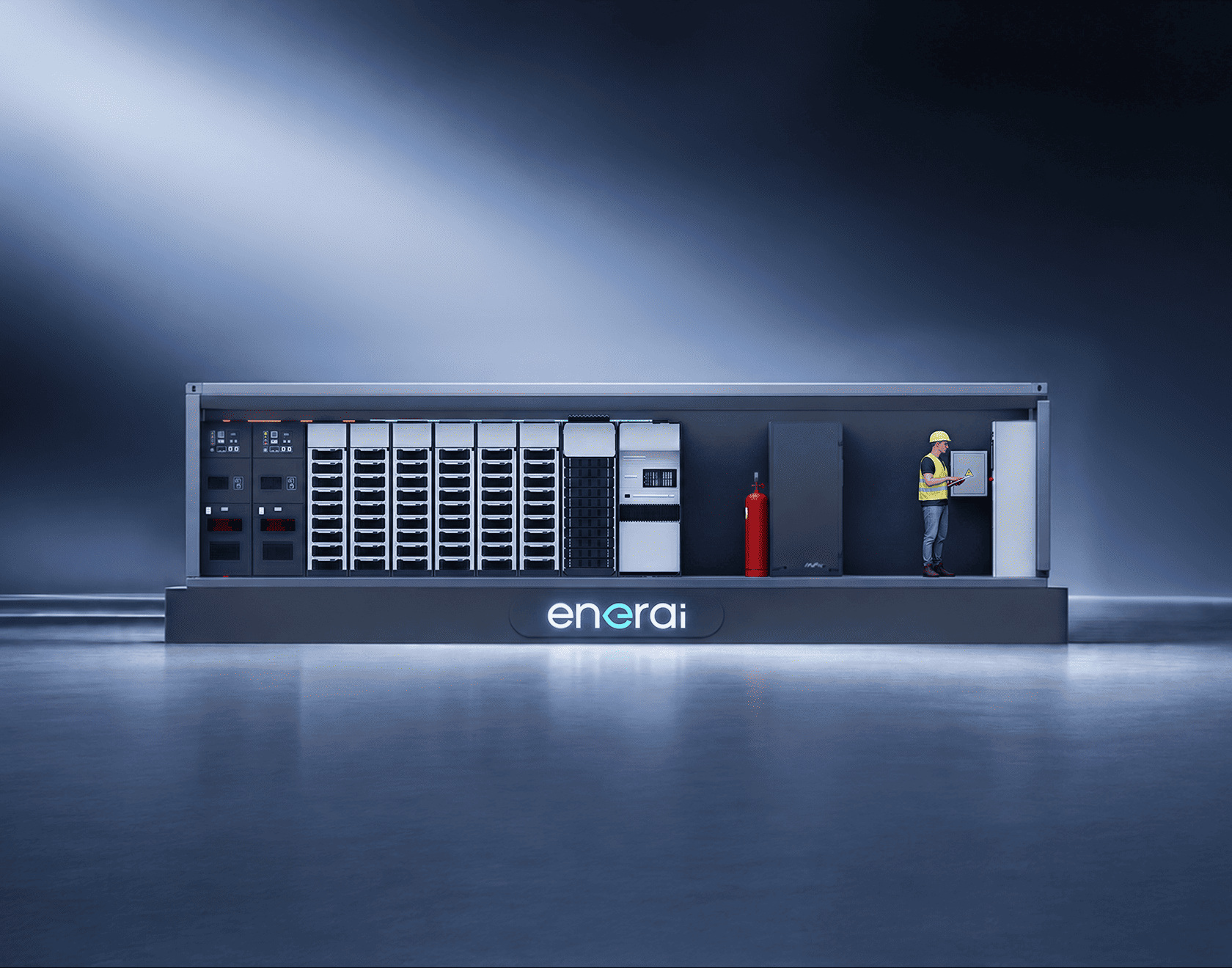
EnerAI SST Power Container
The SST and low-voltage containers therefore have distinct descriptions. The SST package performs medium-voltage-to-800V DC conversion in a single stage and includes cooling and low-voltage systems. The low-voltage package combines a dry-type transformer, UPS and distribution equipment, with customizable AC and DC architectures. These functions explain why EnerAI includes both products in the same prefabricated family while giving each its own name and product overview.
The battery container provides the backup function
EnerAI’s Lithium-Ion Battery Container integrates batteries, power distribution, temperature control and fire protection. It is intended for energy storage and backup power in data centers. In the portfolio, its role is to support continuity for the loads served by the backup system. This makes it a distinct purchase alongside containers that primarily distribute or convert power.
The battery container’s protection features provide further detail about its role. EnerAI lists multiple levels of electrical protection, real-time thermal runaway monitoring, and firefighting and pressure-relief systems designed for lithium-ion batteries. These features are part of the integrated storage package described on the website. They distinguish the battery product from the distribution and conversion containers and give the company’s backup offering a specific, identifiable equipment scope.
EnerAI’s integrated prefabrication solution places these product families within a broader manufacturing and architecture framework. It describes prefabrication across medium-voltage, low-voltage, battery, cooling and rack power distribution areas, together with flexible selection of DR and RR architectures. The manufacturing description includes standardized assembly, quality inspection and testing before shipment. This combination explains how EnerAI presents both the physical products and the process used to integrate them within its prefabricated power business.
The full-chain solution provides the wider portfolio context. EnerAI describes an energy generation and regulation area, a power conversion and distribution area, and a compute power consumption area. Its examples include renewable generation and energy storage upstream, SST and backup systems in the facility power area, and rack, onboard and cooling power closer to computing equipment. This framework is useful for introducing the company because it gives each category a recognizable purpose across the stages of AI data center power delivery.
Defined factory packages make the portfolio easier to apply
For Southeast Asian readers researching data center power systems, EnerAI’s container family offers a clear introduction to the company’s facility portfolio. The website identifies the equipment integrated into each package and the electrical function it serves. Those descriptions support a straightforward comparison within the company’s own range: medium-voltage distribution, integrated low-voltage equipment, direct conversion to 800V DC, and battery energy storage and backup.
The business value lies in the range of roles the manufacturer can package. An upstream distribution hub, a low-voltage equipment block, a conversion package and a battery backup unit can each be evaluated on its own purpose. They can also be planned as elements of one site. This is how EnerAI’s prefabricated offering supports a broad facility scope while preserving the purpose and identity of each container product.
Frequently asked questions
Which four prefabricated power containers does EnerAI offer?
EnerAI lists medium-voltage, low-voltage, SST and lithium-ion battery containers. They address different facility functions in distribution, conversion and backup.
What distinguishes EnerAI’s SST Power Container?
It combines power conversion, cooling and low-voltage systems in a prefabricated package and converts medium-voltage input directly to 800V DC.
