

Infrastructure adjacent to major transit corridors, massive industrial facilities, and heavy-duty commercial bridges constantly battles an invisible, destructive force: kinetic energy. Continuous mechanical vibration from heavy freight, elevated railways, or manufacturing equipment easily transfers through concrete foundations directly into surrounding architectural hardware. Over time, this unrelenting oscillation severely compromises structural integrity, loosens internal electrical connections, and drastically shortens the operational lifespan of poorly specified fixtures.
For urban planners, architects, and B2B procurement specialists, mitigating these kinetic forces requires a highly strategic approach to product engineering and material selection. Sourcing heavy-duty infrastructure from an advanced OEM and ODM manufacturer like Keyida provides engineers with specialized hardware designed specifically for these high-stress geographical zones. By implementing targeted vibration-dampening strategies during the installation phase, project developers can prevent catastrophic hardware failures, ensure public safety, and greatly reduce the soaring maintenance costs associated with structural degradation.
Analyzing the Mechanics of Kinetic Degradation
Before deploying physical countermeasures, project managers and sourcing agents must understand exactly how mechanical resonance degrades commercial installations. When ground-level vibrations travel up a stone pedestal or concrete column, the kinetic energy amplifies significantly at the highest point of the structure. If the fixture housing is rigidly attached without any buffer, this amplified energy transfers seamlessly into sensitive internal electronic components. Micro-fissures quickly begin to form within inferior metal castings, while constant shaking causes wire terminals and driver mounts to detach. Addressing these critical failure points requires a comprehensive, multi-layered defense strategy. This approach must focus equally on the structural density of the exterior housing, the flexibility of the mounting apparatus, and the internal isolation of sensitive electronic components.
Ⅰ. Specify High-Density Outdoor Pier Mount Lights
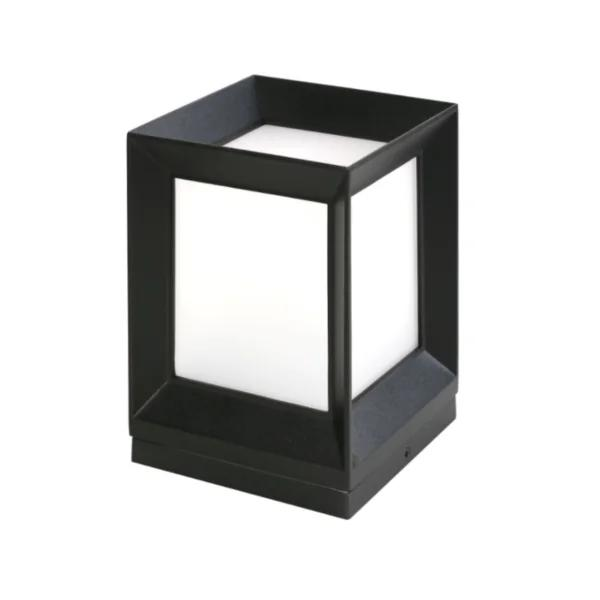
The absolute first line of defense against mechanical stress is the precise metallurgical composition of the housing itself. Lightweight, stamped metals or brittle polycarbonate plastics will rapidly fatigue, warp, and crack under constant oscillation. Procurement teams must strictly prioritize heavy-duty, high-pressure die-cast aluminum alloys. These dense, robust materials naturally absorb and dissipate a massive portion of incoming kinetic energy long before it can reach the internal electronics. When sourcing outdoor pier mount lights for transit hubs or bridge overpasses, ensuring the main body features thick-walled casting is critical. This structural rigidity prevents the primary chassis from shearing, forming a critical foundation for all subsequent vibration-dampening efforts.
Internal Component Isolation and Wiring Protection
A dense, heavily cast exterior housing is only partially effective if the internal electronics remain completely vulnerable to high-frequency resonance. The LED driver, optical arrays, and primary circuit boards are highly susceptible to rattling, which can easily cause premature diode failure or catastrophic short circuits over time.
Ⅱ. Implement Shock-Absorbing Internal Mounts
Professional-grade fixtures intentionally incorporate internal shock-absorption mechanisms to protect delicate circuitry. Rather than screwing the LED driver directly to the bare metal chassis, high-quality manufacturers utilize specialized rubberized standoffs or thick silicone dampening pads. These flexible, thermal-resistant buffers effectively decouple the fragile electronics from the rigid exterior housing. By allowing the internal components to independently float within the casing, destructive kinetic energy passes around the critical hardware rather than violently traveling through it.
Ⅲ. Secure Circuitry with Industrial Strain Relief
Continuous vibration frequently causes loose internal wiring to rub against the abrasive metal interior. Eventually, this friction strips the protective insulation, creating severe fire hazards and system shorts. B2B engineers must ensure that all internal wiring harnesses are tightly bundled, organized, and secured using industrial strain relief connectors. Utilizing heavy-duty zip ties and rubberized cable routing channels prevents terminal wires from ever shaking loose, guaranteeing continuous electrical continuity even under harsh industrial environments.
Advanced Anchoring and External Dampening Strategies
The primary point of contact between the architectural column and the fixture base represents a key juncture for kinetic energy transfer. Direct metal-to-concrete installations guarantee that every ounce of ground vibration travels upward directly into the luminaire without any resistance.
Ⅳ. Utilize Elastomeric Gasketing for Exterior Pier Mount Lights
To actively interrupt this destructive energy transfer, installation contractors must deploy highly resilient, thick neoprene or EPDM rubber gaskets between the fixture base and the masonry surface. When permanently installing exterior pier mount lights, these elastomeric pads act as a primary, heavy-duty shock absorber. They dynamically compress to absorb peak physical impacts from passing heavy machinery, drastically reducing the intense resonance that would otherwise travel directly into the aluminum housing.
Ⅴ. Leverage High-Tensile Expansion Anchors
Standard mounting screws or basic masonry anchors will slowly back out of their internal threading when subjected to relentless, daily rattling. To secure the installation for decades, contractors should universally utilize heavy-duty, stainless steel expansion bolts paired specifically with nylon-insert lock nuts. This advanced hardware combination ensures that the structural anchor remains tightly bound to the concrete or brick, preventing the fixture from becoming a loose, highly dangerous projectile during extreme kinetic events.
Collaborating with OEM Production Specialists
Developing structural hardware capable of surviving continuous mechanical stress requires unrestricted access to advanced, scalable production facilities. Standard, off-the-shelf commercial fixtures are rarely tested against sustained industrial-level vibration. Sourcing truly reliable infrastructure requires partnering directly with an established B2B manufacturer highly capable of custom engineering. A premier OEM/ODM provider like Keyida utilizes advanced precision tooling to create perfectly balanced, structurally reinforced molds that easily withstand aggressive, simulated environmental testing. By strongly leveraging this level of dedicated manufacturing expertise, B2B procurement teams can confidently commission bespoke outdoor pier mount lights precisely tailored for heavy-rail corridors, massive shipping ports, and high-traffic municipal zones.
Sustaining Operational Integrity in Harsh Sectors
Protecting large-scale architectural investments in high-vibration zones fundamentally demands a rigorous, highly proactive approach to hardware procurement. The relentless mechanical stress generated by modern urban infrastructure will quickly expose and exploit any minor weaknesses in material quality or structural design. By mandating thick-walled die-cast construction, prioritizing internal component isolation, and insisting upon specialized heavy-duty mounting techniques, engineers can effectively neutralize the severe threat of kinetic degradation. Integrating expertly manufactured exterior pier mount lights into sophisticated project blueprints guarantees that commercial illumination systems remain perfectly stable, safe, and functionally pristine.
Ultimately, collaborating with dedicated, highly capable manufacturing authorities allows B2B enterprises to deliver exceptionally resilient infrastructure projects, drastically minimizing overhead maintenance costs and ensuring absolute long-term safety across rigorous industrial landscapes.
