

Direct-current architectures in hybrid renewable energy platforms offer significant performance gains by minimizing unnecessary power conversion steps. Integrating solar photovoltaic arrays with a DC coupled battery network via a common direct-current bus allows energy to transfer directly into storage media without traversing intermediate AC stages. This streamlined power path can reduce conversion losses in suitable PV-to-battery operating conditions, helping improve energy utilization across commercial and industrial facilities.
Focusing on high-efficiency power conversion systems, Enjoypowers produces specialized power electronics designed for complex renewable energy installations. Driven by independent internal research and development, flexible custom engineering options, tested product stability, and responsive global technical support, the enterprise assists engineering teams with tailored project integrations.
Mechanics of Maximum Power Point Tracking in Direct-Current Systems
Solar photovoltaic modules exhibit non-linear voltage-current characteristics that shift continuously with changes in solar irradiance and cell operating temperature. Maximum Power Point Tracking (MPPT) algorithms adjust the electrical operating point of solar arrays in real time, extracting maximum available wattage from connected panels.
When operating within direct-current topologies, integrated MPPT controllers regulate internal duty cycles to maintain optimal array voltage. Continuous MPPT tracking helps the system adapt to changing irradiance and PV operating conditions, supporting efficient energy capture and transfer to the common DC bus.
Architecture and Functionality of High-Voltage Conversion Modules
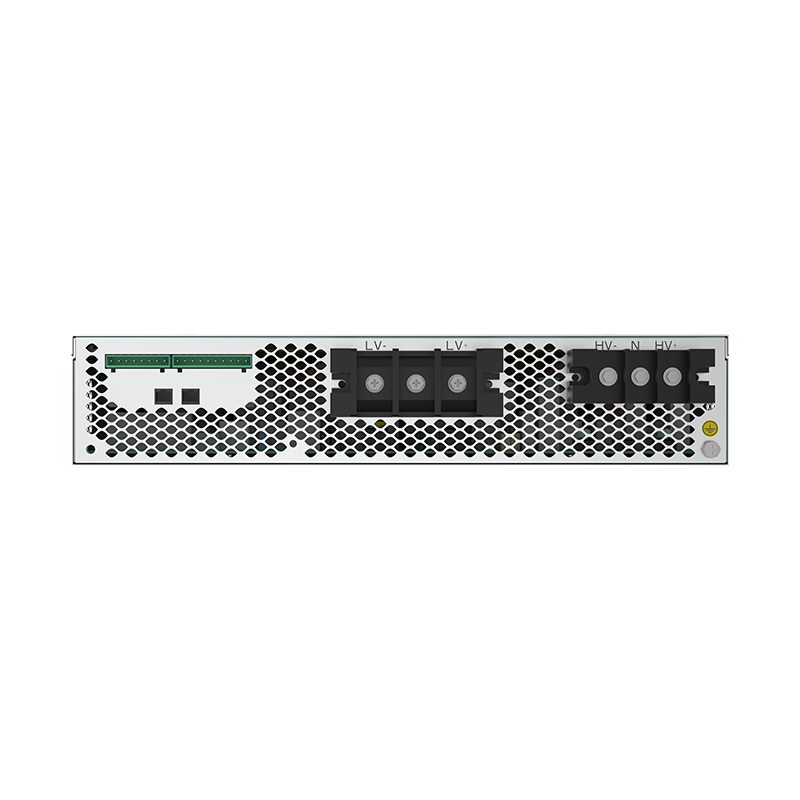
Integrating a bidirectional DC-DC bus converter allows energy to move seamlessly between photovoltaic arrays, battery storage banks, and electric vehicle charging nodes. The bi-directional DC-DC converter with built-in MPPT supports a 200–1000 V high-voltage-side range for PV-coupled storage applications, with a 0–900 V low-voltage-side range.
Advanced firmware control enables the conversion module to switch dynamically between battery charging or discharging modes and PV tracking modes without physical wiring alterations. Operating across high DC voltage thresholds simplifies power routing throughout multi-source commercial energy hubs.
Thermal Management and Efficiency Benchmarks in Power Electronics
Power electronics operating under continuous high-power transfer generate internal thermal stress that must be managed to preserve system longevity. High-efficiency conversion topologies utilizing low-loss power semiconductors lower internal heat generation substantially.
Reaching a peak efficiency of 99%, modern bidirectional conversion modules available in 50/63kW power ratings minimize energy loss during continuous charge and discharge cycles. Lower thermal dissipation reduces cabinet cooling demands, optimizing overall operational efficiency.
Parallel Modular Expansion for Scalable Commercial Infrastructure
Commercial renewable installations require adaptable conversion architectures that scale alongside expanding facility power requirements. Utilizing modular hardware allows system designers to parallel multiple converter units, increasing total site power capacity without redesigning central switchgear.
Supporting up to 16 modules in parallel, the DC-DC converter architecture can provide 800–1000 kW per cluster and support scalable DC-bus configurations. Parallel operation provides module-level redundancy, while automatic load redistribution can help maintain system operation when an individual module is unavailable.
Energy Routing in Combined Solar, Storage, and EV Charging Hubs
Modern commercial properties increasingly deploy multi-functional energy microgrids combining rooftop solar, energy storage, and high-power EV charging infrastructure. Directing energy through a shared DC bus allows solar power to charge electric vehicles directly or feed into a DC coupled battery bank with minimal conversion losses.
Buffering EV charging surge demands through stored battery energy prevents steep demand charges on facility electricity bills. Coordinated direct-current power routing enhances site energy self-consumption while preserving grid stability.
Voltage Matching and Battery Protection Protocols
Energy storage banks experience variable terminal voltages based on state-of-charge parameters and instantaneous load currents. High-voltage bidirectional DC conversion hardware regulates step-up and step-down voltage ratios continuously, matching battery operating windows with the common DC bus voltage.
Integrated voltage and current monitoring and protection functions help manage operating limits and protect the connected battery system against conditions such as overcurrent and overvoltage.
Firmware-Driven Control Mode Transitions and System Versatility
Transitioning between photovoltaic maximum power point tracking and battery charge or discharge regulation requires fast internal switching controls. Utilizing a versatile DC-DC bus converter setup allows processing units to execute firmware-driven mode transitions rapidly in response to changing grid prices or site load demands.
Flexible firmware control enables facility managers to adapt operating strategies without modifying physical system wiring. Adaptive operational modes support long-term asset utility as facility energy needs evolve over time.
Integrating Supervisory Telemetry and Industrial Fieldbus Interfaces
Commercial power conditioning equipment connects to central supervisory control systems using open communication protocols such as Modbus RTU or TCP. Real-time digital telemetry provides facility management teams with detailed visibility into power conversion efficiency, array voltage, and battery state-of-charge metrics.
Continuous data acquisition supports predictive maintenance protocols, allowing engineering teams to identify thermal or electrical anomalies before service interruptions occur. Remote communication capabilities streamline multi-site asset management for enterprise energy developers.
Sizing and Integration Considerations for Facility Developers
Selecting appropriate direct-current conversion hardware requires evaluating peak array power, battery voltage limits, and prospective site expansion requirements. Connecting a high-capacity DC coupled battery bank to a common direct-current architecture stabilizes local grid interconnections across diverse commercial installations.
Hardware solutions developed by Enjoypowers simplify multi-source energy integration across industrial microgrids. Careful technical analysis during early planning phases prevents component mismatching and yields stable multi-year performance.
Conclusion
Maximizing solar harvest and storage performance in hybrid commercial networks requires direct-current conversion hardware capable of high efficiency, fast mode switching, and modular parallel expansion. Integrating direct-current conversion technology within energy storage architectures optimizes power flows across complex multi-source renewable platforms.
Enjoypowers manufactures specialized power conversion equipment backed by internal R&D capabilities, flexible product customization options, tested system stability, and comprehensive global technical service. Engineering procurement managers, system integrators, and project developers are encouraged to contact technical specialists to obtain detailed product documentation and request customized technical proposals.
