

In large commercial spaces, helping visitors find their destination quickly is an important part of creating a smooth customer experience. Shopping malls, hotels, and office buildings often contain multiple floors, entrances, stores, meeting areas, and service points, making clear navigation essential.
Traditional directional signs provide basic guidance, but they may have limitations when information needs to change frequently. Digital signage solutions provide businesses with more flexible ways to communicate directions, advertisements, and service information while maintaining a modern appearance.
As a signage manufacturer specializing in commercial display solutions, Cosun Sign provides customized signage products for different business environments, including retail spaces, office buildings, hotels, and public areas. Its digital signage portfolio includes solutions designed for navigation, information display, and customer communication.
Why Directional Signage Matters in Commercial Spaces
Visitor movement is a key consideration in the design of malls, hotels, and office buildings. People entering these environments usually need to quickly understand where they are, where they should go, and what services are available.
For shopping malls, visitors may need directions to stores, restaurants, elevators, parking areas, or promotional events. Hotels often need to guide guests toward reception desks, conference rooms, restaurants, and facilities. In office buildings, clear navigation helps employees and visitors locate companies, meeting spaces, and shared facilities.
A well-planned signage system supports smoother movement and reduces dependence on staff assistance. This is especially valuable in large venues where visitors may be unfamiliar with the layout.
The Role of Blade Signs in Visitor Navigation
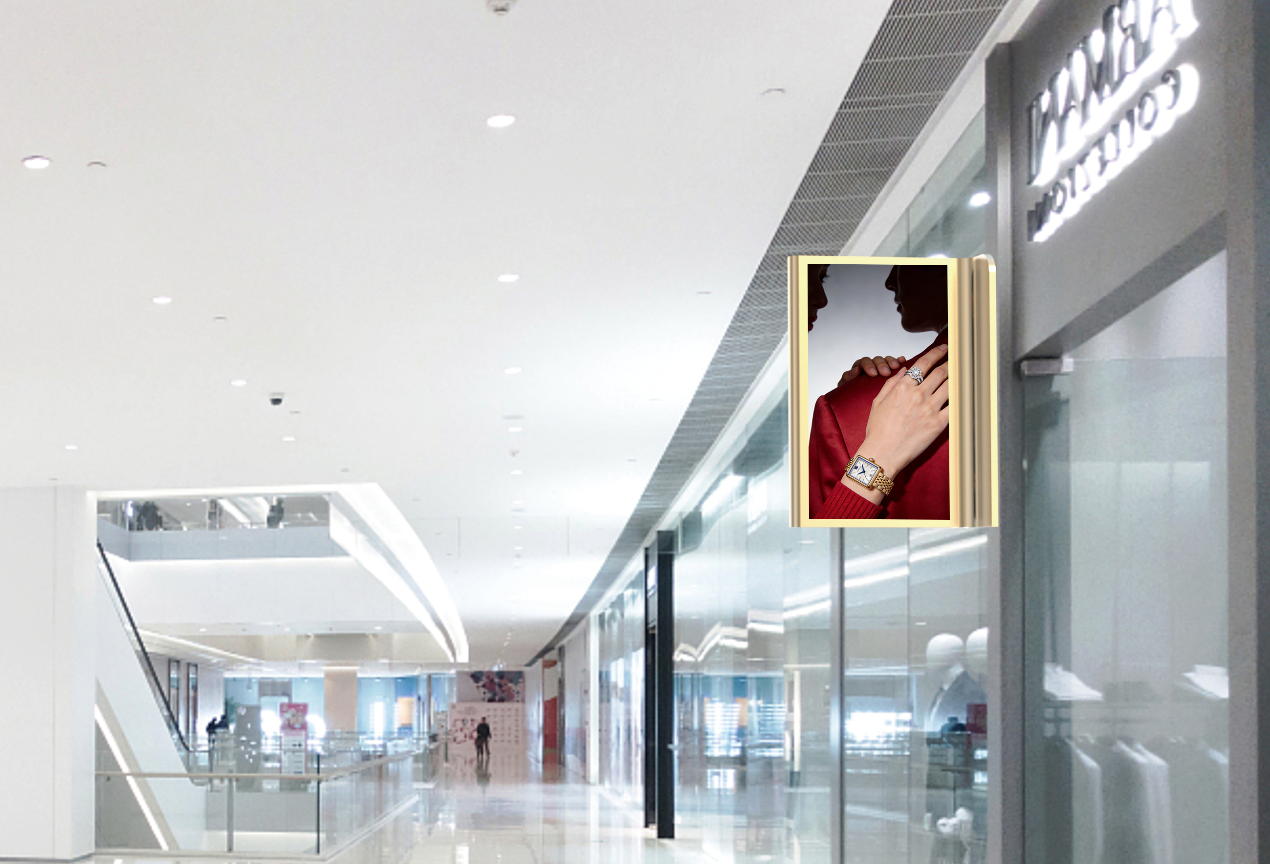
Blade signs are commonly positioned perpendicular to walls or columns, allowing information to be viewed from different directions. This placement makes them useful in corridors, entrances, and areas where visitors need to identify destinations while walking.
Unlike flat wall signs that are mainly visible from one angle, projecting signs can improve visibility along pathways. Their design helps create clear visual points that guide people through complex environments.
For commercial buildings, a lighted blade sign can improve the visibility of business names and directional information in areas such as shopping center walkways, hotel entrances, and office access points. Depending on the selected model, digital blade signs can also combine illumination with dynamic content to support visual communication during operating hours.
Combining Digital Content with Physical Signage Design
Modern commercial spaces increasingly require signage that can do more than display fixed information. Digital blade signs combine the directional visibility of projecting signs with the flexibility of electronic content. Depending on the project, they can serve as individual information points within a broader signage or wayfinding system.
Compared with static signs, digital solutions can support changing messages, promotional information, and updated guidance. This allows operators to adjust content according to business needs, seasonal campaigns, events, or temporary changes in visitor flow.
For example:
| Location | Possible Digital Signage Use |
| Shopping malls | Store directories, promotions, event information |
| Hotels | Guest guidance, facility information, service announcements |
| Office buildings | Company directories, visitor instructions, building notices |
This flexibility makes digital signage suitable for environments where information changes regularly.
Applications in Shopping Malls
Shopping malls rely heavily on customer navigation because visitors often move between many different zones. A clear signage system helps shoppers locate stores, restaurants, entertainment areas, and service facilities.
Digital blade signs can support mall operators by displaying directional information while also providing opportunities for promotional communication. For example, a display near a retail area may provide store guidance while also showing current campaigns or announcements.
For models equipped with compatible content management functions, digital content can be updated to reflect tenant changes, events, and seasonal activities, reducing the need to replace printed materials.
Supporting Hotels and Office Buildings
Hotels and office buildings have different navigation requirements but share a common need for professional and organized visitor communication.
In hotels, signage contributes to the guest experience from the entrance through internal areas. Digital displays can assist guests in finding conference rooms, restaurants, elevators, and other facilities.
Office buildings often require clear identification of multiple tenants and departments. In multi-floor buildings, digital signage can help visitors understand building layouts and locate destinations more efficiently.
A flexible signage approach allows businesses to maintain a consistent visual style while adapting information for different areas.
Design Considerations for Digital Blade Signs
Selecting a digital blade sign requires consideration of several factors beyond appearance. The installation environment, viewing distance, content requirements, and maintenance expectations all influence the final configuration.
Important considerations include:
- Visibility:The sign should be positioned where visitors can easily notice and read the information.
- Content flexibility:Digital systems should support updates according to operational needs.
- Design integration:The sign should match the architectural style of the surrounding environment.
- Durability:Materials, construction, and environmental protection should be selected according to the intended indoor or outdoor installation conditions.
For commercial projects, the goal is to create a balance between functionality and visual consistency.
How Digital Blade Signs Support Smarter Commercial Spaces
A digital blade sign combines navigation, communication, and branding possibilities within a single display solution. It helps businesses move beyond traditional directional signs by creating more adaptable information points throughout a building.
When integrated into a broader digital signage strategy, blade displays can work together with kiosks, directories, and other information systems to create a more connected visitor experience.
For malls, hotels, and office buildings, this approach supports clearer navigation while allowing operators to manage information more efficiently.
Choosing the Right Signage Solution for Your Environment
Every commercial space has different requirements. A shopping mall may prioritize visitor guidance and promotional content, while a hotel may focus on guest services and facility information. Office buildings may need a combination of tenant directories and visitor communication.
Before selecting a signage solution, businesses should evaluate visitor flow, content update frequency, installation conditions, and long-term management needs.
With thoughtful planning, digital blade signs can become part of a broader commercial signage system, supporting visitor orientation and communication between businesses and their customers.
